Urgent.News

What's breaking now, across thousands of outlets.

Health & Medicine

New heart procedure at Mater a 'major advancement'

The Mater Hospital in Dublin has described as a "major advancement in cardiac care" a new procedure it can now carry out for patients who are considered too high-risk for conventional open-heart surgery.
New heart procedure at Mater a 'major advancement'

The Mater Hospital in Dublin has announced a major advancement in cardiac care with a new procedure available to patients considered too high-risk for conventional open-heart surgery. The percutaneous mitral valve replacement involves inserting a new mitral valve through a catheter tube inserted in the groin, making it less invasive than traditional heart surgery.

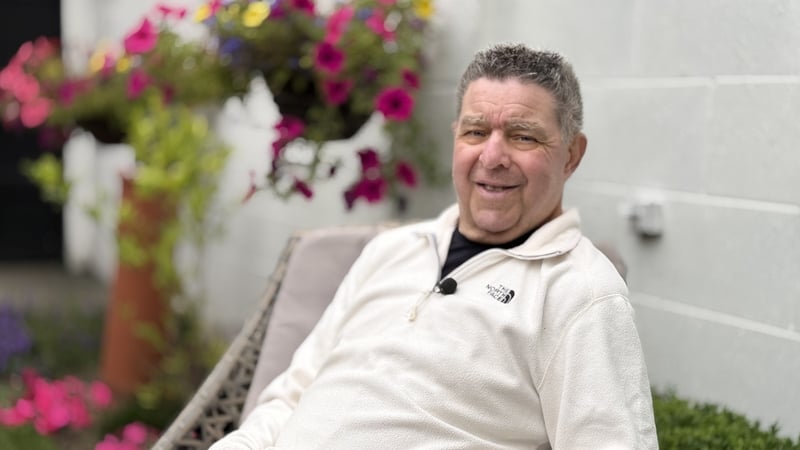
This procedure also results in a significantly shorter recovery time. The Mater has performed five such procedures since starting in May 2023. One patient, Derek Toomey from Finglas, Dublin, benefited from the new procedure. Diagnosed with a severely narrowed, calcified mitral valve in 2023, Toomey experienced low energy and shortness of breath, making simple tasks challenging.

With a conventional operation deemed too risky due to underlying lung disease, Toomey was offered the new procedure by the Mater in June 2024. After the successful surgery, he recovered quickly, walking around the hospital within three days. Professor Ivan Casserly, who leads the multidisciplinary team at the Mater, emphasized that this procedure offers a new way to treat mitral valve disease without opening the chest, providing a faster recovery for patients compared to traditional surgery.

Written by urgent.news from RTE News's reporting — not their text. Machine-written — may contain errors; check the original before relying on it.

Also reported by 1 other outlet

Read the original at rte.ie →

More in Health & Medicine

“Seeing Father Lee Tae-seok in the photo gives me strength.” The first neurologist from South Sudan was born. On the 15th, a graduation ceremony was held at the Catholic University of Sudan in Juba, South Sudan, for 29 medical students, including Dr. Achuil Lual Deng, the first neurologist in South Sudan. Dr. Lual, who was born in 1986 in Malakal, South Sudan, said in an interview, “I was inspired by Father Lee Tae-seok, who devoted himself to the poor in Uganda and South Sudan.” He continued, “I was in high school when I first met Father Lee, who was working as a doctor in Torit, Eastern Equatoria, South Sudan. At that time, I was struggling with the idea of becoming a doctor, but seeing his devotion to the poor, I decided to become a doctor.” Dr. Lual, who graduated from the Catholic University of Sudan with a degree in medicine in 2011, worked at the Juba Teaching Hospital and then moved to Australia to pursue his dream of becoming a neurologist. He studied at the University of Adelaide in Australia and returned to South Sudan in 2022 after completing his studies. Dr. Lual said, “I am very happy to be able to help my people. I am grateful to the Catholic Church and Catholic University of Sudan for giving me this opportunity.” Bishop Thomas Mangold of the Catholic Diocese of Juba also expressed his gratitude, saying, “I am very grateful to Dr. Lual for his dedication to the people of South Sudan.” The Catholic Diocese of Juba has been actively involved in the medical field in South Sudan, and in 2019, it established the Saint Theresa Hospital in Juba, with the support of the German Catholic Church. The hospital provides medical services to local residents, and it also offers training and education for medical students. Dr. Lual’s achievement is expected to have a significant impact on the medical field in South Sudan, where there is a severe shortage of medical professionals. The country has a population of about 14 million people, but it only has about 100 doctors. In particular, there are only two neurologists in the entire country, and Dr. Lual is the first neurologist from South Sudan. Dr. Lual’s dream is to establish a rehabilitation center in Juba and to provide medical services to patients with neurological disorders. He said, “I want to help my people recover from illness and return to their daily lives.”

More from Tuesday 18 August →