2,000-Year-Old Chinese Rock Art May Have Been Preserved with Blood and Lime
Discover how Huashan artists mixed blood, lime, and red clay to create a durable pigment that weathered the elements for millennia.
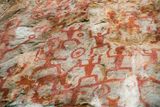
For over 2,000 years, an intricate rock art site known as Huashan has remained remarkably well-preserved in a 160-mile stretch along the Zuojiang River in southern China. Despite the harsh weather conditions, including monsoon rains, high humidity, and extreme temperatures, scientists from Shandong University may have uncovered the secret to its longevity.
The researchers believe the artists combined lime and blood into a mortar to mix with the pigment, which resulted in the creation of a durable binder for the rock art. The protein profile of the preserved blood suggests it may have come from women during childbirth or shortly after, indicating the community was likely matriarchal and worshipped female fertility.
The pigment, derived from red clay deposits, was encapsulated by biomineralized calcium carbonate through a chemical reaction involving blood proteins and carbon dioxide from the air. This innovative process allowed the Huashan rock art to survive for millennia in a challenging environment.
Written by urgent.news from Discover Magazine's reporting — not their text. Machine-written — may contain errors; check the original before relying on it.