Black walls, solar heating and student-led learning: Inside Sonam Wangchuk’s school in Ladakh
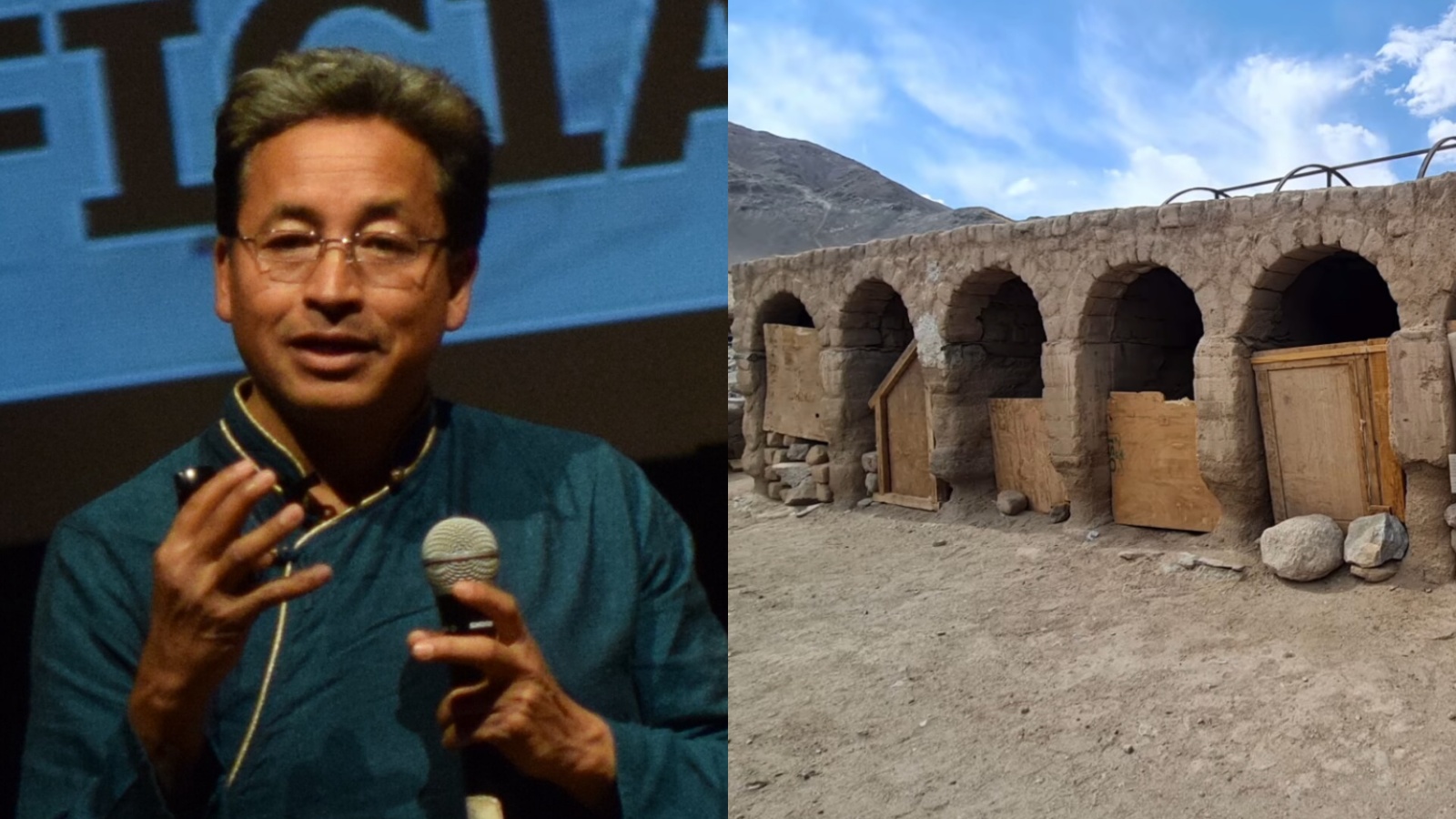
In the outskirts of Leh, Sonam Wangchuk's school, Students’ Educational and Cultural Movement of Ladakh (SECMOL), presents a unique concept of an educational institution. Established in 1988, the solar-powered school served as the inspiration for the plot of the popular Rajkumar Hirani film, 3 Idiots. The campus is a model of sustainability, featuring solar heating, and students actively participate in managing and maintaining the facility.
What sets SECMOL apart is its holistic approach to education. Alongside traditional academic subjects, students learn ancient Ladakhi songs, dance, and history. Rather than being an add-on, the arts are integrated into daily learning experiences, with an art room where students can explore painting and crafting. The campus also boasts a common room for meetings and discussions, fostering a strong sense of community among students.
The library at SECMOL is a cornerstone of the institution, providing a space for students to engage in reading and learning. Books are generously donated by the public, contributing to a constantly evolving vocabulary display known as the “word wall.” The campus embodies self-sufficiency, with separate storage spaces for grains and vegetables, and even an irrigation system crafted from discarded plastic bottles.
Beyond the classroom, students engage in various activities that connect them with nature and traditional lifestyles. They learn to ride horses and create art using pebble painting, while also participating in the cultivation of organic vegetables. The campus is adorned with the 3 Rs – Recycle, Reuse, and Reduce – reinforcing the importance of environmental responsibility.
Psychologist Dr. Rimpa Sarkar, Founder of Sentier Wellness, Mumbai, highlights the psychological differences between SECMOL's experiential learning and conventional classroom-based education. She emphasizes that children learn autonomy, confidence, accountability, and problem-solving skills through responsibility for daily tasks.
This experiential learning not only solidifies academic foundations but also cultivates a strong sense of competence in children. Dr. Sarkar further asserts that a learning environment that encourages art, creativity, and community interaction significantly influences children's curiosity and critical thinking skills. Creativity thrives when children feel psychologically safe, enabling them to explore new ideas, consider different perspectives, and develop their own reasoning rather than passively accepting information.
Written by urgent.news from The Indian Express - Lifestyle's reporting — not their text. Machine-written — may contain errors; check the original before relying on it.
This story
This is one outlet's version. Read the fullest account.