This octopus can mimic many dangerous sea creatures. Here’s how its bizarre trick works
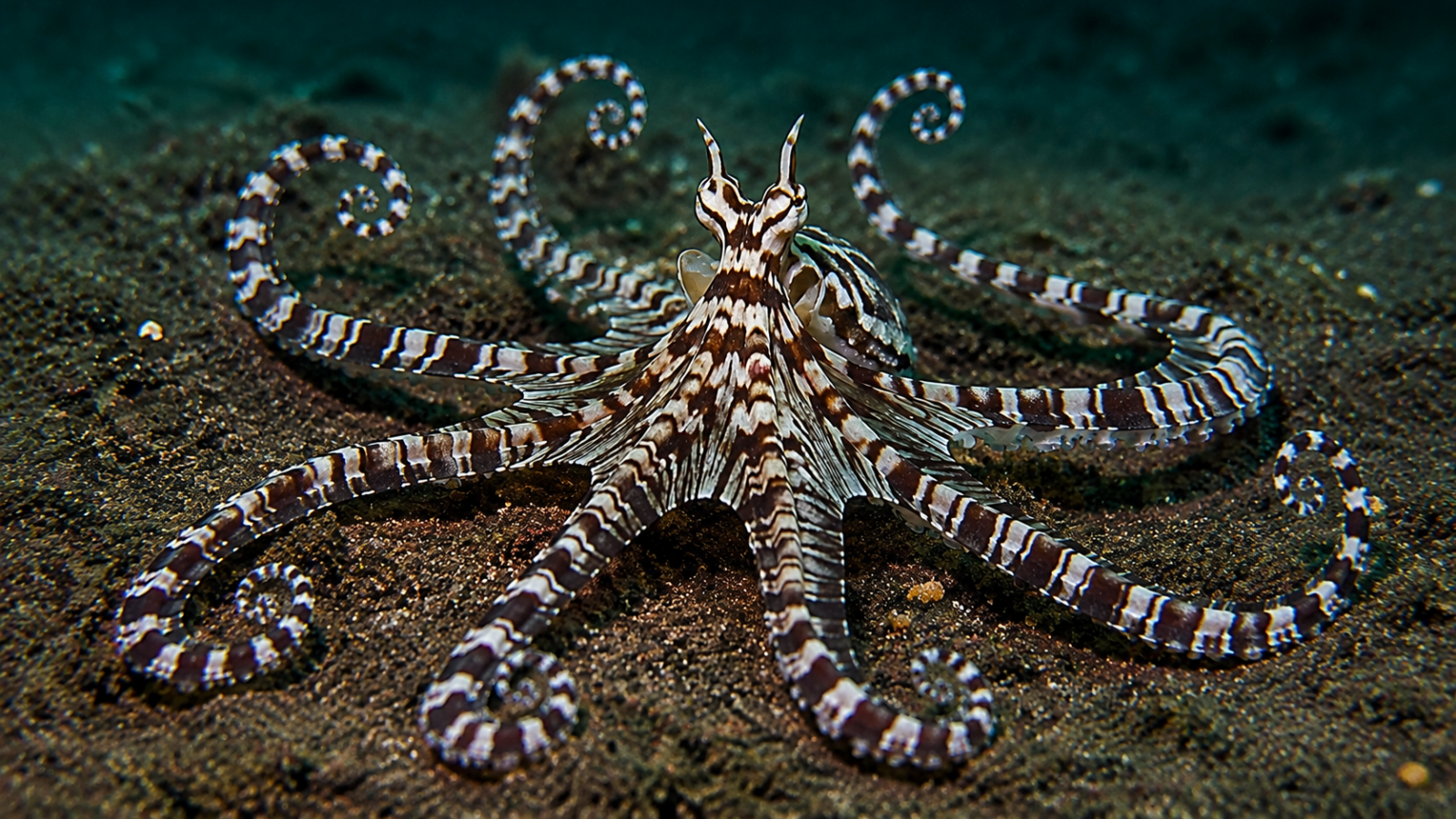
The mimic octopus, Thaumoctopus mimicus, inhabits tropical Indo-West Pacific waters, regularly encountered in shallow, sandy or muddy coastal regions. This remarkable creature is renowned for its ability to alter its colour, body shape, posture, and movements in order to impersonate other marine animals. Scientists have observed its transformations into flatfish, lionfish, and sea snakes.
The mimic octopus does not merely alter its colour and fade into its environment; it can manipulate various aspects of its appearance and behaviour concurrently. Its flexible arms can be arranged to change the silhouette of its body, while its skin can adjust its colour and pattern. It also modifies its posture and swimming patterns to make itself appear as another creature.
This behaviour differentiates mimicry from simple camouflage, which merely blends an organism into its surroundings. In the case of the mimic octopus, this is an example of dynamic mimicry, as the animal actively changes its appearance and behaviour.
The primary function of these deceitful displays is believed to be defence. The mimic octopus is thought to employ these strategies to discourage potential predators. A notable illustration is its sea-snake imitation. When confronted by a possible threat, the octopus has been observed adopting a posture and movement pattern akin to that of a banded sea snake.
This could dissuade a predator from proceeding with an attack, especially since some of the animals the octopus resembles can be hazardous. However, it is essential to note that while predator deterrence is likely the purpose of these displays, the protective advantage has not been experimentally verified under all conditions. It is more accurate to state that mimicry helps the octopus evade predators, rather than asserting that scientists have definitively proven that each guise achieves this outcome.
Another intriguing aspect of the mimic octopus's behaviour is its selection of a disguise based on the threat. Researchers hypothesize that the octopus's actions may vary depending on the situation, but the precise method by which it chooses a specific form remains unclear. While it might seem that the octopus consciously decides, "A sea snake will scare this predator away," such a conscious decision cannot be established from the behaviour alone.
What is known is that the animal can coordinate its arms, skin, posture, and movements to produce strikingly different appearances. However, it is important to remember that the octopus is not physically metamorphosing into a sea snake, flatfish, or lionfish. Instead, it utilizes its highly adaptable body and exceptional control over its skin and movements to craft a convincing imitation.
Written by urgent.news from The Indian Express - Lifestyle's reporting — not their text. Machine-written — may contain errors; check the original before relying on it.
This story
This is one outlet's version. Read the fullest account.