Hold tight! How two hurricanes forced a lizard to change its grip
Hurricanes 14 days apart managed to rewire a wild population’s genome and skeleton in a way that indicated evolutionary biology on steroids
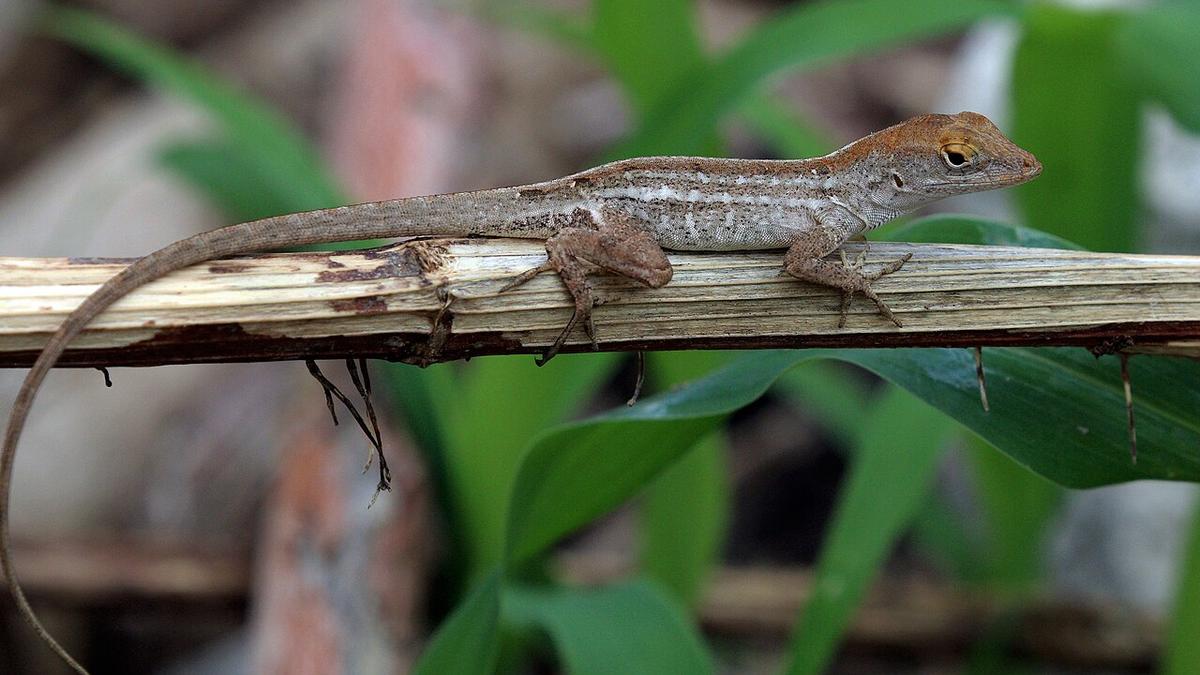
Two hurricanes that struck the Turks and Caicos Islands in quick succession in 2017 forced a small brown anole lizard to adapt its grip. The fierce winds, reaching 265 km/hr and 200 km/hr respectively, threatened to uproot the lizards clinging to tree branches. In response, these lizards evolved over a span of six weeks, exhibiting longer forelimbs, shorter hind legs, shorter toes and larger toepads.
However, the researchers found a peculiar trait: the fourth hind toe of the surviving lizards was shorter than before the storm. This unexpected development puzzled the scientists, as longer toes were generally associated with a better grip. After further investigation, they discovered that five genes related to muscle and skeletal development had become more prevalent on the islands after the hurricanes.
Among these genes, hs6st1 stood out in causing the shorter fourth toe in the surviving anoles. To confirm this connection, the researchers conducted experiments on a related species, the brown anole, using CRISPR gene-editing technology. They found that knocking out the hs6st1 gene in embryonic brown anoles resulted in shorter fourth toes, thinner toe cartilage, and in some cases, missing toes altogether.
Additionally, the team used a wind tunnel to demonstrate that lizards with shorter fourth toes clung to wooden dowels more effectively in simulated wind conditions (118 km/hr). Their findings, published in Current Biology, suggest that extreme weather events can drive rapid evolutionary changes in wild populations, potentially within a single generation.
The researchers emphasize the importance of considering the potential impacts of increasingly frequent and severe weather events on biodiversity.
Written by urgent.news from The Hindu - Sci-Tech's reporting — not their text. Machine-written — may contain errors; check the original before relying on it.