Punjab powers ahead with ambitious welfare push
Punjab has accelerated a range of public welfare, healthcare, transport, environmental and social protection programmes since Maryam Nawaz Sharif became the province’s first woman chief minister in February 2024. One of the government’s flagship initiatives is the Suthra Punjab programme, a province-wide waste management and sanitation project operating across 36 districts. The programme uses…
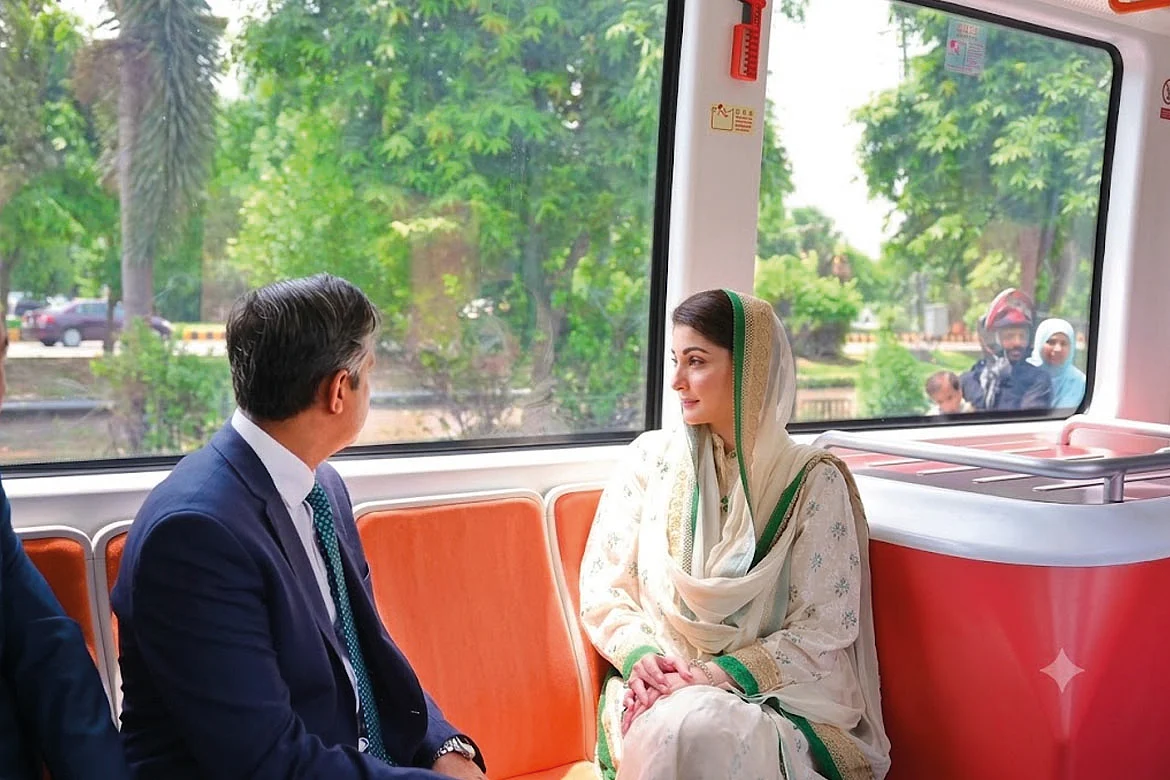
Since Maryam Nawaz Sharif assumed leadership as Punjab’s first female chief minister in February 2024, the province has ramped up an array of welfare programmes, spanning healthcare, transport, environmental protection and social security. Central to these efforts is the Suthra Punjab initiative, a statewide waste management and sanitation project covering 36 districts.
This project leverages digital tracking, vehicle monitoring, public complaints channels, and a dedicated helpline to enhance waste collection and disposal. It employs approximately 184,000 sanitation workers to serve around 138 million residents. In addition, authorities are constructing the Nawaz Sharif Institute of Cancer Treatment and Research in Lahore’s Valencia Town.
This advanced medical facility, nearing completion at 85%, will provide comprehensive cancer care, including radiation therapy, chemotherapy, emergency services, and research facilities, with a projected capacity of 915 beds. The estimated cost exceeds Rs75 billion, positioning it as one of Pakistan’s largest public-sector cancer treatment centers.
Beyond healthcare, the government has introduced welfare schemes targeting vulnerable populations. The Imam Masjid Honorarium Card program provides a monthly stipend of Rs25,000 to imams throughout Punjab. The Rehmat Card initiative offers financial assistance to widows and orphaned children via digital payment systems. Housing remains a priority, with the Apni Chhat Apna Ghar program offering interest-free loans to low-income families for home construction. The government has also pledged to provide housing plots to eligible families.
Punjab is simultaneously modernizing its transportation infrastructure. In Lahore and other major cities, projects include electric bus fleets, extensions to mass transit routes, and plans for Faisalabad and Gujranwala’s transit systems. Additionally, an e-taxi program has been launched, offering women drivers quotas, subsidized down payments, and support for vehicle registration.
Efforts to protect women’s rights include the establishment of women’s protection centers, hostels for working women, and related support facilities in various urban centers. Further initiatives encompass laptop distribution, scholarships, financing for small entrepreneurs, and high-tech agricultural support programs. In cultural and tourism sectors, Punjab aims to revive Basant safely and restore 170 historical sites, including gurdwaras, churches, and other heritage landmarks. Recent anti-encroachment operations have cleared streets and public spaces in major cities.
However, the Punjab administration’s reforms have faced criticism. Opposition parties and rights groups have raised concerns about the Punjab Defamation Law, expanded police powers, and a rise in police encounters under the Crime Control Department. There are also worries about audit irregularities, rising inflation, unemployment rates, and the quality of public services.
The administration argues that these reforms are part of a long-term strategy to modernize Punjab and improve the lives of ordinary citizens, contingent upon transparency, independent oversight, and the ability to deliver tangible benefits.
Written by urgent.news from Gulf News's reporting — not their text. Machine-written — may contain errors; check the original before relying on it.