German startup builds wind turbine blades from wood instead of fibreglass
A pioneering startup in Germany is crafting wind turbine blades using laminated veneer lumber, presenting a sustainable solution to the prevalent fiberglass composite problem. The initial prototypes are currently being tested in the field, demonstrating their potential. This innovation seeks to tackle the increasing challenge of waste generated by conventional wind turbine blades, with plans for…
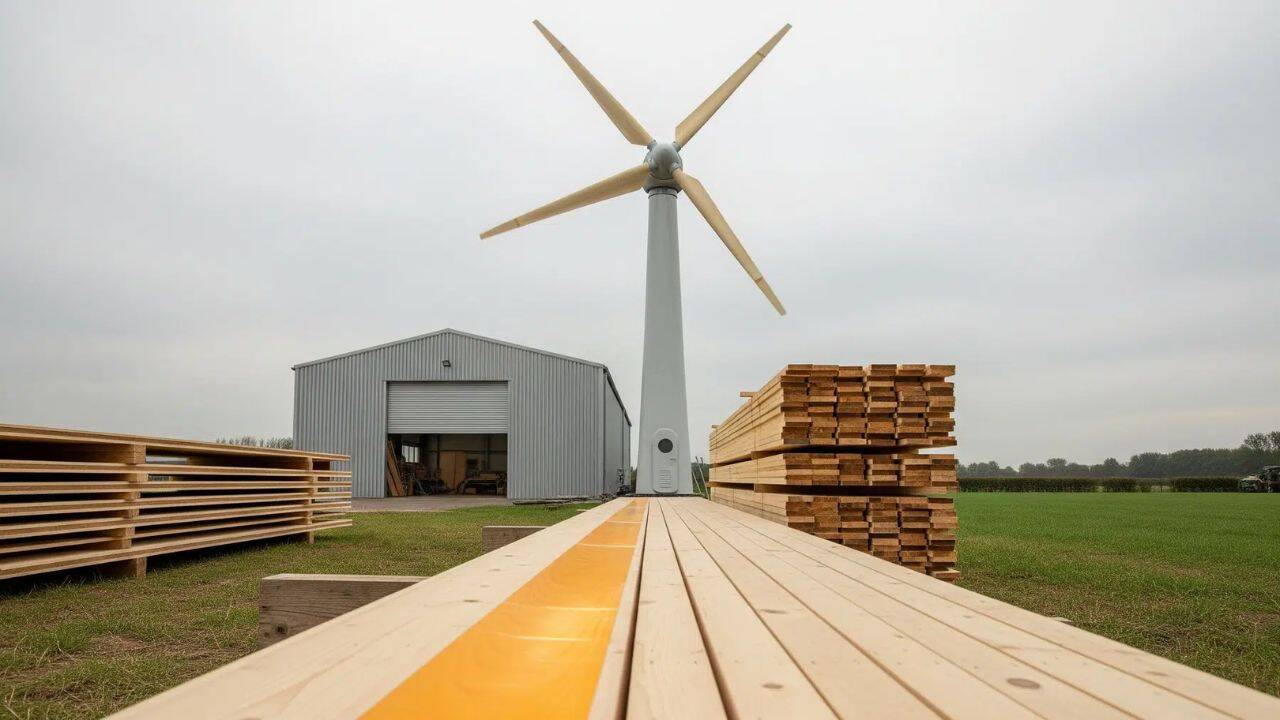
Wind turbine blades, usually made of fibreglass, have a limited lifespan of 20 to 25 years before they need to be replaced. While most components of a wind turbine can be easily recycled, the blades pose a significant disposal problem. A German startup, Voodin Blade Technology, is working on a solution by developing wooden blades instead of fibreglass.
These wooden blades are being tested on an existing turbine in Breuna, Germany, marking the world's first prototype installation of its kind. Measuring about 19.3 meters in length, these blades are made from thin layers of wood veneer bonded together. The company claims that these blades are even more durable than fibreglass blades, with fewer fatigue characteristics.
The key to this innovation is laminated veneer lumber (LVL), a type of engineered wood commonly used in structural beams. LVL is strong, dimensionally stable, and can withstand harsh conditions. Voodin Blade Technology uses automated CNC milling machines to cut complex 3D shapes directly from a digital file, eliminating the need for expensive moulds. This process reduces carbon dioxide emissions by 78% and can cut costs by up to 20% compared to conventional blade production.
The environmental impact of wind turbine blades is substantial. Currently, most turbines are considered clean machines, but the blades are made from fibreglass and carbon fibre bound with epoxy resin, which are difficult and expensive to recycle. This leads to a growing issue of blade waste, with an estimated 43 million metric tons of blade waste expected worldwide by 2050.
The company is developing larger blades, aiming for commercial deployment in the onshore market, which accounts for the majority of wind capacity. Independent testing and certification will be required before these wooden blades can be widely adopted in the industry.
Written by urgent.news from Times of India's reporting — not their text. Machine-written — may contain errors; check the original before relying on it.