Fidelity Bank advocates stronger systems to unlock Ghana’s trade and enterprise potential
Fidelity Bank Ghana has called for stronger stakeholder collaboration, harmonised trade systems, and targeted institutional support to remove the structural barriers holding back Ghana's traders and entrepreneurs, particularly women, from reaching their full potential.
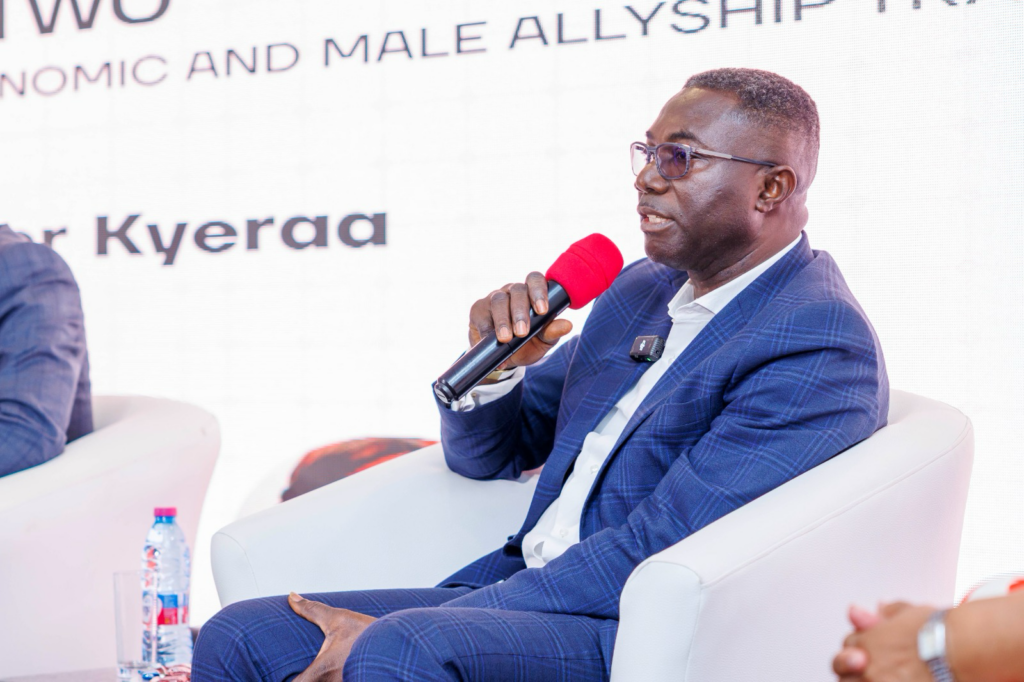
Fidelity Bank Ghana has urged for improved collaboration among stakeholders, harmonized trade systems, and targeted institutional assistance to overcome the structural challenges that hinder Ghanaian traders and entrepreneurs, especially women, from realizing their full potential. This recommendation was made by two high-ranking officials of the bank during the Breaking Barriers to Trade conference, where Fidelity Bank was featured as a speaker in two sessions focusing on trade modernization and women-led enterprise growth.
Aaron Ameyaw, Director of Banking Operations, addressed the issue of data quality and fragmented customs systems as significant impediments to trade expansion in Ghana and the surrounding region. He stressed that while artificial intelligence (AI) has the potential to revolutionize trade and commerce, its effectiveness hinges on the accuracy of the underlying data.
He pointed out that in Ghana, data is a critical issue. AI algorithms rely on data, and incorrect data leads to significant problems. Furthermore, he advocated for the harmonization of customs regulations across neighboring countries, a matter that has been neglected for too long. The bank's introduction of the Publican AI System in early 2026, complementing the Integrated Customs Management System at Ghana's ports, has already resulted in revenue growth surpassing $300 million, demonstrating the impact of the right technology partnerships.
On the subject of women-led businesses, Alex Agyei-Amponsah, Director of SME Banking, emphasized that 38% to 46% of businesses in the region are owned by women. The challenge, he argued, lies not in women's ambition but in the structures that support them. "The issue is not their desire to expand their business. They genuinely wish to grow, but the difficulty has been in figuring out how they can achieve growth while also taking care of their families and fulfilling other responsibilities," he explained.
To address this, Fidelity Bank launched the Fidelity Young Entrepreneurs Fund, supporting women and young entrepreneurs aged 18 to 40 (up to 45 for women) from the initial idea phase through incubation to funded, market-ready businesses. The fund provides concessional financing and programs to help entrepreneurs meet regulatory and compliance requirements that would otherwise prevent them from entering the market.
Agyei-Amponsah also highlighted the bank's group lending approach as a means to broaden access, citing an example of a Federation of Associations of Ghana Exporters member who successfully participated in a yam export contract to Canada through a group, an opportunity unavailable to her individually. "That is how slowly but surely we are progressing," he noted.
"Once this facility is approved, and the yam is exported, the next time around, that woman's business will be able to secure a contract on her own." For Fidelity Bank, both trade modernization and women's enterprise development underscore a single belief: breaking trade barriers requires both appropriate systems and institutions ready to meet people where they are.
Written by urgent.news from Joy Business's reporting — not their text. Machine-written — may contain errors; check the original before relying on it.