More than half of hippocampal synapses vanish, yet mouse memories remain intact
How do we remember the distant past? For decades, scientists have believed synaptic potentiation—the adaptive strengthening of our brain's cellular connections—to be the key to memory retention. Researchers from the Okinawa Institute of Science and Technology (OIST) and collaborators including the University of Tsukuba, the Exploratory Research Center on Life and Living Systems (ExCELLS), and…

For years, scientists have thought that synaptic potentiation—the strengthening of connections between brain cells—is crucial for retaining memories. However, a new study from the Okinawa Institute of Science and Technology (OIST) and other institutions suggests that the architecture of higher-order synapses may be more important.
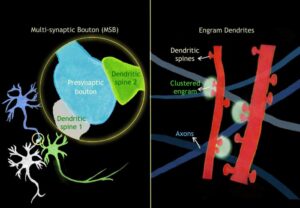
Professor Kazumasa Tanaka, who led the research, explained that while the traditional belief was that stronger synapses with larger dendritic spines were key to long-term memory, this study found that specific clusters of engram synapses are preserved even after significant changes in the brain.
The researchers utilized a technique called artificial hibernation to study this phenomenon in mice. During hibernation, brain activity significantly decreases, and synapses are eliminated. Surprisingly, despite more than half of the synapses in the hippocampus region disappearing and brain activity dropping by about 70%, the mice retained their memory recall, sometimes even improving.
To understand why memory was preserved, the team employed a sophisticated technique called CLEM (correlative light and electron microscopy). This allowed them to observe engrams—the physical traces of memories in the brain—by combining the high-resolution imaging of fluorescence microscopy with the detailed examination of electron microscopy. They discovered that although many synapses were lost, certain clusters of synapses remained intact and were crucial for memory retention.
The findings indicate that not every synapse is essential for memory, and instead, it's the architecture of specific clusters of engram synapses that matters. This challenges the long-held belief that larger, more stable dendritic spines are key to long-term memory. The researchers are hopeful that their method could lead to new insights into other neuroscientific questions in the future.
Written by urgent.news from Medical Xpress's reporting — not their text. Machine-written — may contain errors; check the original before relying on it.