Long-Term Memory Loss Secrets Revealed with Artificial Hibernation
A study involving artificial hibernation in mice has shown how memories survive even after the brain temporarily loses more than half of its synaptic connections, challenging the long-held view that long-term memories depend on stable individual synapses. The post Long-Term Memory Loss Secrets Revealed with Artificial Hibernation appeared first on GEN - Genetic Engineering and Biotechnology News .
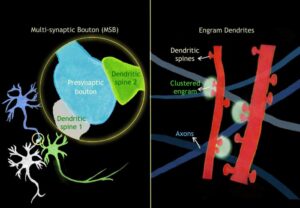
Recent research on artificial hibernation in mice has challenged the conventional belief that long-term memory retention relies on stable individual synapses. A team of scientists from Okinawa Institute of Science and Technology (OIST), University of Tsukuba, ExCELLS, and National Institutes of Physiological Sciences conducted a study revealing that memory may be preserved through resilient patterns of neural architecture, including specific clusters of connected synapses that remain intact during widespread brain remodeling.
According to Kazumasa Tanaka, PhD, the head of OIST's Memory Research Unit, the findings suggest that small clusters of engram synapses are preserved, allowing accurate recall even after prolonged hibernation. Engrams, the physical traces of memories, are encoded through changes at synapses, which are the junctions where neurons meet.
When neurons repeatedly fire together, their synapses strengthen, causing structural changes such as larger dendritic spines. Conversely, inactive connections weaken and may eventually disappear.
The team used a mouse model to examine structural mechanisms underlying memory retention. They induced artificial hibernation in mice, which caused a profound reduction in neuronal activity and eliminated more than half of the hippocampal synapses. Despite these significant structural changes, the animals retained their previously acquired memories and preserved neuronal representations of experience during behavioral tests.
The researchers found that multi-synaptic boutons (MSBs), where one presynaptic terminal connects to multiple dendritic spines on different cells, were more likely to survive artificial hibernation. These MSBs, along with other resilient patterns of neural architecture, could act as "core memory traces," enabling the brain to rebuild functional networks after major disruptions.
This discovery sheds light on the complex nature of memory storage in the brain, indicating that specific clustered patterns of connections between brain cells may be key to retaining long-term memory. The study challenges the long-held view that synaptic potentiation is the key to memory retention and highlights the importance of higher-order synaptic architecture in preserving memories during significant brain remodeling.
Written by urgent.news from GEN Biotechnology's reporting — not their text. Machine-written — may contain errors; check the original before relying on it.