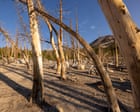
Ancient forests took 100,000 years to recover from the last global warming period similar to today – Wyoming fossils reveal what happened
Understanding what happened in these forests 56 million years ago may help humanity recognize similar thresholds before we cross them again, the lead author of a new study writes.
Around 56 million years ago, Earth's forests experienced a tipping point during a period of intense greenhouse warming. As temperatures rose by up to 11 degrees Fahrenheit (6 degrees Celsius), the lush canopies began to thin. This stress from heat and drought led to a loss of large numbers of trees and opened the forest canopy to more sunlight.
In southern Wyoming, ferns and warmth-loving plants like palms replaced the previous tree species. A new study in Science reveals that these Wyoming forests lost 60% of their canopy during the Paleocene-Eocene Thermal Maximum (PETM), taking over 100,000 years to recover. This period is considered Earth's closest natural analog to today's warming, with human carbon dioxide emissions occurring at a much faster rate.
The researchers used microscopic plant cuticles found in fossil soils to reconstruct the ancient forest structure and density, allowing them to understand how the forests changed over time.
Written by urgent.news from The Conversation's reporting — not their text. Machine-written — may contain errors; check the original before relying on it.