Robot reaches 4,500-year-old sealed barrier inside Egypt’s Great Pyramid
A robot explored a hidden passage within Egypt's Great Pyramid of Giza. It reached a sealed barrier which may be 4,500 years old. This discovery has renewed questions about the ancient monument's hidden contents. Researchers used modern technology to examine areas difficult for people to access. Further study could reveal new details about the pyramid's design and construction.
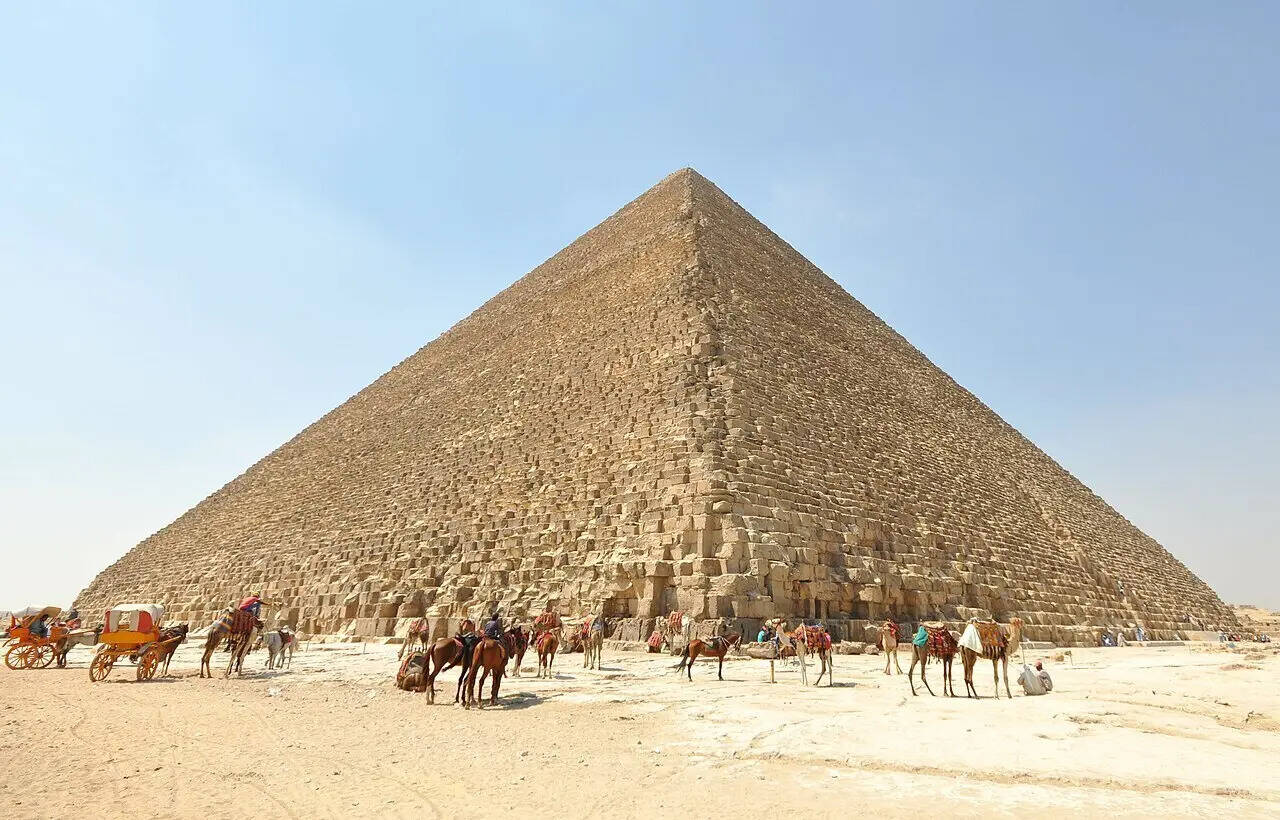
A robot ventured through a concealed passage inside Egypt's Great Pyramid of Giza and came across a sealed barrier that has likely remained undisturbed for around 4,500 years. The discovery has sparked renewed speculation about potential hidden contents within the ancient monument. Utilizing advanced robotic and scanning technology, researchers navigated a narrow corridor, which would be challenging and dangerous for humans to traverse.
The robot reached the end of the corridor but encountered an impenetrable wall or sealed doorway. Experts believe further investigation could unveil new insights into the pyramid's design and construction.
The Great Pyramid of Giza has been examined for centuries, yet scientists still lack comprehensive knowledge about its internal structure. Professor Rob Richardson, a Robotics expert from Leeds, and his team embarked on the challenge in 2020 to explore a narrow shaft inside the pyramid. The initiative was spurred by Hong Kong dentist and inventor Dr. Tze Chuen Ng's call for researchers to design a robot capable of traversing the passage and investigating its contents.
The 20 cm by 20 cm passage stretches approximately 60 meters (197 feet). Prior attempts to investigate it had caused damage, emphasizing the importance of developing a robot that could move through the passage without inflicting further harm. The project spanned nearly five years to complete.
Richardson and his team constructed a lightweight robot weighing about 5 kg. Its diminutive size and low weight enabled it to navigate the narrow passage while consuming minimal power. Professor Richardson remarked, "This design was certainly challenging. The robot had to be extremely lightweight—and in the end, we managed to reduce it to 5kg." He further explained that the robot's lightness reduced the power requirements, turning potential obstacles into advantageous opportunities.
The team also devised a system allowing the robot to move cautiously through the shaft. The robot's camera eventually provided researchers with a glimpse of an area previously inaccessible. What did the robot discover Instead of uncovering an open chamber, the robot encountered a solid wall or sealed door. This finding has not resolved the most significant question surrounding the passage but has instead raised a new one: What lies behind the sealed barrier?
The area has not been opened, and there has been no official announcement about the contents on the other side. Egyptologist Zahi Hawass has stated that he plans to release an official report on findings related to the passage after 2026. He has also suggested that a breakthrough discovery could radically alter our understanding of ancient Egypt.
Written by urgent.news from Times of India's reporting — not their text. Machine-written — may contain errors; check the original before relying on it.