Mining sector: From growth engine to growth constraint
As many industry insiders feared, the mining sector's performance has weakened further, locking it into negative territory for the first half of the year.
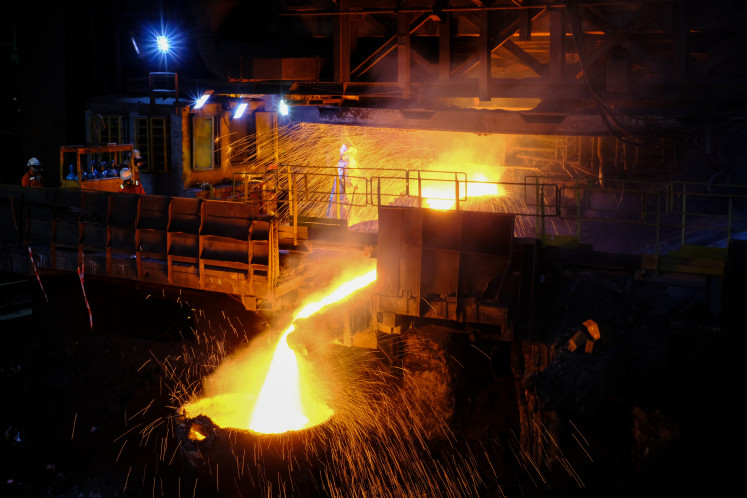
The mining sector found itself in negative territory for the first half of 2026, confirming industry concerns. Indonesia's national economic growth report for Q2 2026 revealed the mining sector contracted by 1.64 percent, while the overall economy expanded by 5.29 percent. Mining, the largest contributor to the economy, stood out as the only sector to report a decline.
This aligns with previous projections of a contraction between 1 and 2 percent. Although the contraction was slightly less severe than in Q1 2026, when it shrank by 2.14 percent, the question remains whether the sector is recovering or merely experiencing a temporary slowdown before facing more pressure. Three main structural pressures were identified: a global nickel oversupply, high-cost HPAL production, and regulatory uncertainty surrounding royalty revisions.
These challenges continued into Q2 2026, albeit with varying intensities. Metal ore and coal/lignite mining were the primary subsectors affected. Nickel, bauxite, and tin production declined steadily, while gold production suffered due to a major landslide at Central Papua’s Grasberg Block Cave underground mine in September. Coal and lignite production contracted by 1.41 percent, primarily due to government-imposed production quotas in the Work Plan and Expenditure Budget (RKAB) quotas.
Written by urgent.news from The Jakarta Post's reporting — not their text. Machine-written — may contain errors; check the original before relying on it.