JICA deploys advanced equipment to tackle Ghana’s coastal erosion
By Gloria Anderson The Japan International Cooperation Agency (JICA) has handed over advanced marine-monitoring equipment to support research and efforts to address Ghana’s worsening coastal erosion. The equipment was presented during the Second Joint Coordinating Committee Meeting and handing-over ceremony of the five-year SATREPS Project on Integrated Sediment and Environmental Management along…
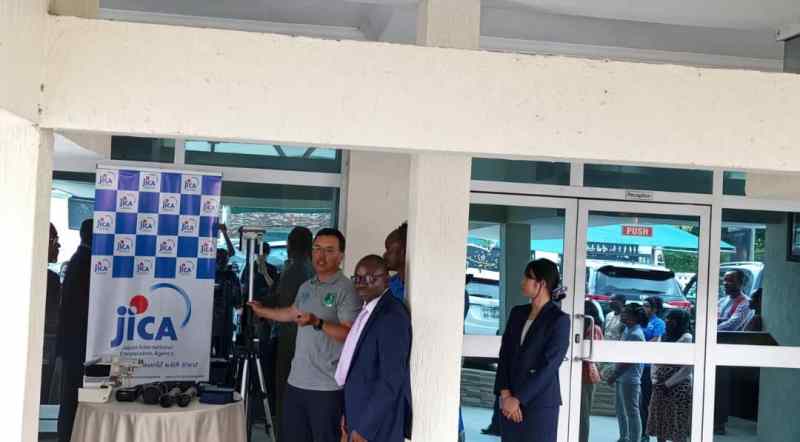
The Japan International Cooperation Agency (JICA) has delivered advanced marine-monitoring equipment to aid research and efforts to combat Ghana’s accelerating coastal erosion. This delivery occurred during the Second Joint Coordinating Committee Meeting and the handing-over ceremony of the five-year SATREPS Project on Integrated Sediment and Environmental Management along Ghana’s and West Africa’s coasts.
The project, worth around 400 million Japanese yen (approximately US$2.5 million), is executed by the University of Cape Coast (UCC) in partnership with JICA, the Japan Science and Technology Agency, the University of Tokyo, and local Ghanaian institutions. Its aim is to produce dependable scientific data to guide coastal protection, disaster risk reduction and livelihood improvement for vulnerable communities.
Professor Denise Wolarnyo Ahitor, UCC’s Vice-Chancellor, highlighted that Ghana’s coastline is losing between one to two meters per year on average, with certain hotspots necessitating immediate action. The equipment comprises buoys and sensors designed to gauge wave height, ocean depth, salinity, and water quality, enabling researchers to gather ongoing data and evaluate alterations in the marine and coastal environment.
Professor Ahitor emphasized that the project will also enhance the skills of young Ghanaian scientists through training and joint research initiatives.
Professor Yoshimitsu Tajima of the Coastal Engineering Laboratory at the University of Tokyo reported that satellite observations over roughly two decades have shown severe erosion around the Volta River and adjacent delta areas. He warned that sediment discharge from the Volta River is rapidly decreasing; if this trend persists, Ghana might witness a notably faster shoreline retreat in the near future.
Tajima explained that while groins and other coastal defense structures have shielded some regions, they might disrupt the natural sediment flow and exacerbate erosion in adjoining areas. According to him, it is crucial to examine the entire coastal system and determine measures that safeguard one zone without triggering erosion issues downstream.
Mabe Biliwi Joshua, Principal Programme Specialist for Infrastructure and Planning, reported that specific areas have experienced shoreline retreats of over 20 meters within the last year. He stressed that the equipment could continue functioning for more than a decade with proper maintenance and protection. Joshua emphasized the necessity of local cooperation from fishermen, coastal communities, and relevant institutions to prevent the removal or damage of the equipment.
The data gathered throughout the project will be utilized to create a predictive system for monitoring waves, tides, sea-level rise, and shoreline shifts. The insights derived from these findings are anticipated to inform government policies and aid in safeguarding coastal communities, fisheries, tourism, and other economic activities threatened by erosion.
Written by urgent.news from GBC Ghana's reporting — not their text. Machine-written — may contain errors; check the original before relying on it.