Gaza cancer patients face rising death rate amid Israeli curbs
CAIRO: Gaza cancer patients are dying at two to three times the pace they did before the start of the war in the territory, as Israel blocks many from travelling for treatment after destroying the only local specialised facility, Gaza doctors said.
Gaza cancer patients are facing an alarming surge in mortality rates since the onset of the recent conflict in the territory, as Israel restricts their access to medical treatment, according to Gaza doctors. The Israeli military destroyed the sole specialized cancer hospital in Gaza last year, following claims that Hamas operatives had concealed tunnels beneath the facility.
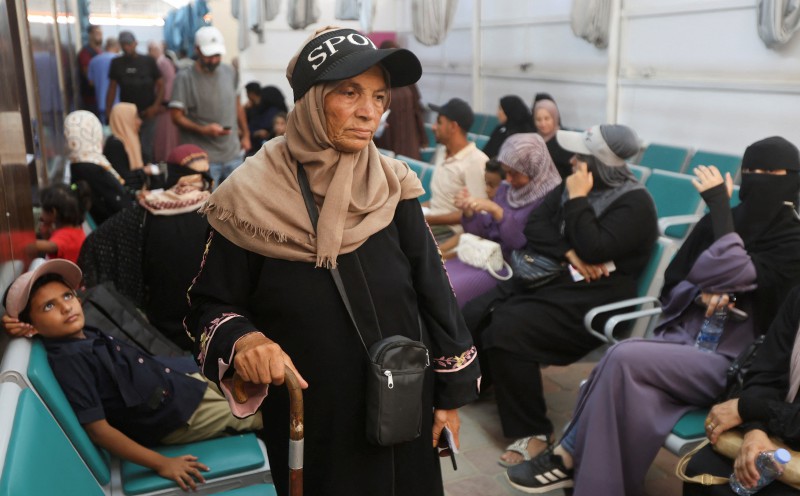
Consequently, an estimated 17,000 cancer patients in Gaza have no local options for chemotherapy or other advanced therapies. Few Palestinians can afford to travel abroad for treatment, and those who manage to do so face Israeli-imposed limitations on daily crossings to Egypt, despite a 2025 ceasefire agreement that entailed free movement.
Israel's military agency, COGAT, responsible for controlling access to Gaza, stated that it collaborates with the World Health Organization (WHO) to coordinate medical evacuations. Patients must secure a valid request from a receiving country and pass stringent security screening processes to depart Gaza. For Khuloud Abu Sahmoud, a 33-year-old Palestinian mother of two suffering from advanced ovarian cancer, the prolonged wait for treatment has become a race against time as her cancer metastasizes.
She has been waiting for permission to leave Gaza for treatment in Egypt or other destinations since the ceasefire was concluded last October. Abu Sahmoud's condition has deteriorated significantly, with her fingernails having fallen out entirely and her disease spreading to her lungs and bones. Israeli military officials acknowledged that approximately 5,800 Gazans have exited Gaza to Egypt for medical treatment since Israel agreed in February to a limited reopening of the Rafah border crossing, a crossing that remained largely closed throughout the war that began in 2023.
However, medical evacuations are contingent upon the receiving country's requests; without such approval, Israel cannot facilitate a patient's departure. Palestinian health officials reported that only 11,000 individuals, including patients, have traversed Rafah since its reopening, a figure considerably lower than the anticipated numbers under the ceasefire deal.
An additional 20,000 patients, including 5,000 with cancer, are registered for treatment abroad but remain ineligible to depart. The ceasefire has ostensibly ended the major fighting, yet Israeli forces maintain control over more than half of Gaza, with the Hamas-controlled strip housing nearly all of Gaza's 2 million residents, primarily in makeshift tents or shelters constructed from damaged buildings.
Prior to the war, local health services had experienced improvements due to foreign investments and local doctors' persistence, according to a Reuters investigation. Nevertheless, most Gaza hospitals were either destroyed or damaged during the conflict, and those that remain functional have experienced a significant reduction in essential medical supplies, with up to 70% of the necessary equipment for cancer treatment and diagnostic services lacking.
The death rate in Gaza's hospitals has risen sharply, with Mohamed Abu Selmia, the head of Gaza's largest hospital, Al Shifa, reporting daily fatalities ranging from three to five due to the lack of chemotherapy. Sobhi Skaik, a Palestinian surgeon who formerly headed the Turkish-Palestinian Friendship Hospital, noted that the pre-war death rate was approximately one to two per day, which has since increased.
He attributed the surge in mortality rates primarily to the absence of local treatment and the stringent border restrictions, while also suggesting that cancer may be spreading more rapidly due to the presence of toxic materials resulting from Israeli airstrikes on Gaza. Prior to the war, around 11,000 cancer patients were registered in Gaza, with an estimated 6,000 developing cancer since the conflict began following the October 7, 2023, Hamas attacks on southern Israel.
Skaik estimated that an additional 6,000 Gazans likely contracted cancer during this period. Some patients with early-stage cancer could potentially be treated, but many remain untreated due to the lack of resources and awareness among those trapped in Gaza.
Written by urgent.news from New Straits Times's reporting — not their text. Machine-written — may contain errors; check the original before relying on it.