Vietnam lawmakers debate unleashing economic potential via new urban rules
The National Assembly yesterday debated the draft Law on Urban Development, emphasizing robust decentralization for megacities while instituting stringent, multi-layered oversight mechanisms to prevent power abuse. Draft urban law proposes private support for public administrative services Draft urban law poised to reform infrastructure financing, TOD in megacities
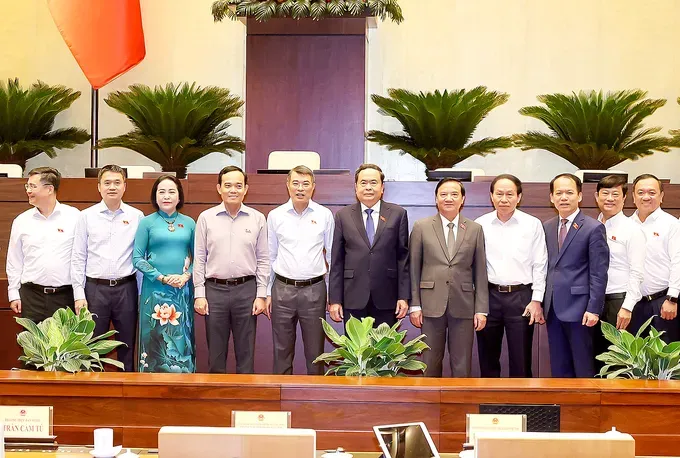
The National Assembly recently deliberated on the draft Urban Development Law, with a focus on promoting decentralization in major cities while implementing rigorous oversight to deter abuse of power. Deputies agreed on a adaptable legal structure, but stressed the critical importance of consistent power control. Deputy Trinh Xuan An from Dong Nai City emphasized the significance of extensive decentralization, arguing that granting over 150 local jurisdictions to the municipal People's Council provides a vast space for local policy-making.
To ensure effective management, he suggested implementing three levels of control: preliminary screening, thorough oversight, and comprehensive post-inspection, all backed by strict accountability. Deputy Trinh Ngoc Phuong from Tay Ninh Province highlighted the IFC model in HCMC and Da Nang City, suggesting they should transform into comprehensive ecosystems that link international capital with domestic funding requirements.
The operational systems for these cities do not need to match, given the former's massive economic scale. Deputy Nguyen Duy Minh from Da Nang City pointed out that the IFC model functions as a precise screening mechanism, negating the need for localities to obtain preliminary approval before applying the law. Several representatives advocated for broadening the law's scope to include centrally-run cities without special-class status to enhance competitive capacity.
However, Deputy Tran Thi Van from Bac Ninh Province expressed concerns about unique mechanisms for specific cities, instead proposing specialized urban models for all qualifying localities. This approach addresses local needs while maintaining the legal system's consistency. Deputy Tran Anh Tuan from HCMC noted the heavy concentration of state-owned enterprises (SOEs) in the region, proposing full authority to the municipal People's Committee to set supplementary charter capital investments for SOEs, bypassing the Prime Minister's constant oversight.
Additionally, decentralizing power should enable localities to independently restructure city-owned enterprises, amplifying the decentralization spirit. Deputy Nguyen The Duy from HCMC echoed this concern and recommended unlocking resources within state-dominated enterprises, which currently cater primarily to SOEs holding 100 percent of charter capital, leaving a regulatory gap for SOEs with 50 to 99 percent state capital holdings.
By removing these operational restrictions, state-dominated enterprises can become a powerful growth engine for HCMC. The Minister of Justice, Hoang Thanh Tung, explained that the draft Law on Urban Development was designed to create a legal pathway that breaks down institutional barriers, boosting regional growth, especially in HCMC.
He advocated for a shift from rigid management to actively driving development, implementing radical decentralization with the motto: "Localities decide, localities act, localities bear accountability." The draft law targets special-class cities, other urban centers, and distinct special economic zones, while allowing non-special cities to apply superior policy frameworks without government approval.
Minister Hoang Thanh Tung stressed the importance of preventing a "race to the bottom" and ensuring heavily governed mechanisms with "valves and locks" to maintain multi-layered oversight. Special-class cities, such as HCMC, can promulgate documents diverging from central regulations but must adhere to rigorous impact assessments and report to the National Assembly Standing Committee within seven days.
The Prime Minister retains the authority to revoke municipal decisions that contradict national interests. The draft also includes a five-year temporal lock, requiring the municipal People's Committee to immediately halt policies causing significant adverse impacts.
Written by urgent.news from SGGP English Edition's reporting — not their text. Machine-written — may contain errors; check the original before relying on it.