Eurovision to bar countries at war from hosting
Eurovision Song Contest organisers announced rule changes on Wednesday excluding any country in an armed conflict from hosting the competition and increasing the minimum age of competitors. While they did not mention any country by name, Israel, which has been at war in Gaza since 2023, came close to winning the competition in both 2025 and 2026, ultimately finishing second on each occasion.…
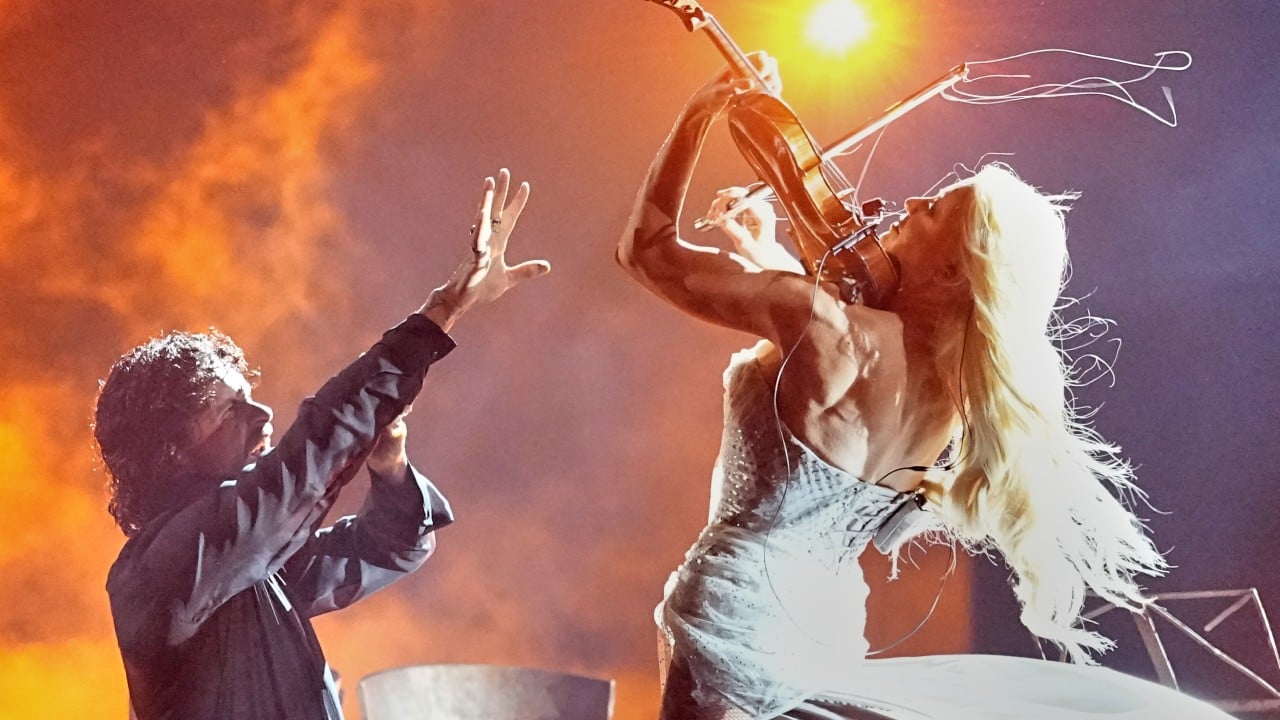
Eurovision Song Contest organizers revealed rule modifications on Wednesday that will prohibit any nation engaged in armed conflict from hosting the event, while also raising the minimum age of participants. While the organizers did not single out any country by name, Israel, which has been embroiled in a war in Gaza since 2023, was almost victorious in both 2025 and 2026, ultimately finishing second each time.
Under previous regulations, the victorious nation typically hosted the subsequent year's competition. The new rules stipulate that "the winning broadcaster will automatically be ineligible to host the contest if an armed conflict, a sensitive geopolitical situation, or any other circumstance significantly impacts the security, safety, or stability of their state or immediate region," according to a statement.
This marks the first instance of five countries—Spain, Ireland, the Netherlands, Slovenia, and Iceland—boycotting the 2026 edition in Vienna due to Israel's participation in the conflict. They argued they could not partake alongside Israel because of its ongoing war in Gaza. Martin Green, director of the Eurovision Song Contest, stated in a statement that the changes were influenced by feedback from member countries.
He added: "These modifications aim to provide everyone involved with greater clarity, safeguard artists, and ensure the contest continues to offer a secure and welcoming atmosphere, while upholding the spirit and integrity that make Eurovision so special." Another amendment involves raising the competitors' minimum age from 16 to 18 on the day of their first rehearsal.
The organizers emphasized that this change continues their efforts to bolster safeguarding and shield younger artists from the pressures associated with competing at Eurovision. Eurovision is jointly produced by public broadcasters affiliated with the European Broadcasting Union and is not confined to European nations. The EBU indicated it could commission an independent security assessment to determine if a winning country is capable of hosting the event safely.
If a winning nation is deemed incapable of hosting the contest safely, the EBU will appoint an alternative host. Despite Ukraine hosting Eurovision in 2017 during conflict in its eastern region between Ukrainian forces and Russia-backed separatists, Ukraine was unable to host the contest in 2022 following Russia's full-scale invasion. Eurovision 2023 was instead held in Liverpool, United Kingdom, on Ukraine's behalf.
Written by urgent.news from South China Morning Post's reporting — not their text. Machine-written — may contain errors; check the original before relying on it.
This story
This is one outlet's version. Read the fullest account.
- Eurovision to bar countries at war from hosting al-monitor.com
- Eurovision bars countries at war from hosting dw.com
- Eurovision to bar countries at war from hosting thelocal.fr
- Eurovision to bar countries at war from hosting thelocal.es
- Eurovision to bar countries at war from hosting thelocal.de
- New Eurovision rule change could prevent Israel from hosting in the future haaretz.com
- Eurovision Bars Countries at War from Hosting en.tempo.co