Why CI/CD Security Testing Is Going Autonomous (and Why It Should Stay Local)
Continuous integration and delivery changed the tempo of software. Teams merge dozens of times a day, infrastructure is redefined on every commit, and a new build can reach production in minutes. Security testing never caught up with that tempo. It still lives in two modes that both fight the pipeline instead of moving with it. […]
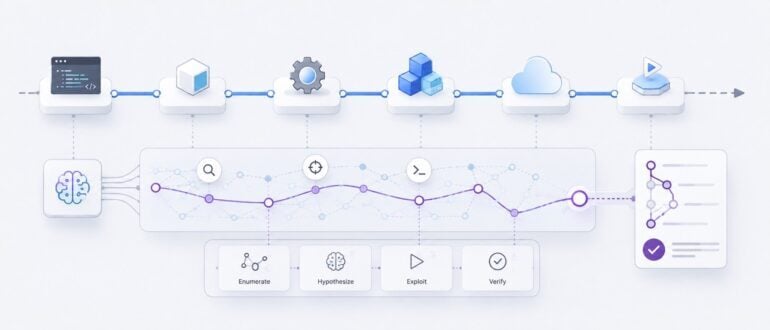
Continuous integration and delivery have transformed software development. Teams merge numerous times daily, infrastructure is redefined with each commit, and a new build can reach production within minutes. However, security testing has not kept pace with this rapid development cycle. Traditional security testing methods, such as scanning and penetration testing, are either too slow or too limited in scope.
Scanners provide a queue of potential issues, often requiring human analysis and leading to alert fatigue. Penetration tests offer valuable insights but are conducted infrequently, typically once or twice a year, and only assess a snapshot of the system at a specific point in time. This outdated approach fails to align with the high-speed nature of modern pipelines.
Autonomous testing aims to bridge this gap by providing continuous, evidence-based security testing. Autonomous testing agents analyze targets, form hypotheses, attempt to exploit vulnerabilities, and only report findings that have been proven with working exploits and raw evidence. These findings represent actual attack paths rather than mere probabilities.
This shift is crucial for CI/CD pipelines because it collapses the triage queue, enabling quick fixes or acceptance of findings, and allows agents to chain vulnerabilities together, mirroring how real-world breaches occur. The modern attack surface extends beyond the application to encompass the pipeline and its various components, including secrets in version control, infrastructure as code, container images, and CI runners.
Autonomous testing can continuously monitor these aspects on every meaningful change, providing a comprehensive security assessment. However, many organizations are hesitant to adopt autonomous testing due to concerns over data privacy and security. Running autonomous testing tools often requires sending internal data to external models, which raises compliance and contractual issues.
To overcome this barrier, autonomous testing must run locally, using open weight models and tokenization. This approach keeps data within the organization's boundaries, enabling deployment within the CI/CD pipeline. To evaluate autonomous testing solutions, organizations should consider whether findings include proof of exploitation, where data is processed, whether the system can operate without external calls, and if the methodology is transparent and auditable.
By adopting local autonomous testing, companies can achieve continuous, proof-based security coverage in their pipelines without compromising data security.
Written by urgent.news from DevOps.com's reporting — not their text. Machine-written — may contain errors; check the original before relying on it.