What Is the Nancy Grace Roman Space Telescope? (Grades 5-8)
This article is for students grades 5-8. The Nancy Grace Roman Space Telescope is NASA’s newest astrophysics observatory. The telescope will scan large sections of space. Roman will help astronomers answer questions about dark energy, dark matter, exoplanets, and more. ______________________________________________________________________ Words to Know Astrophysics: a branch of space science that…
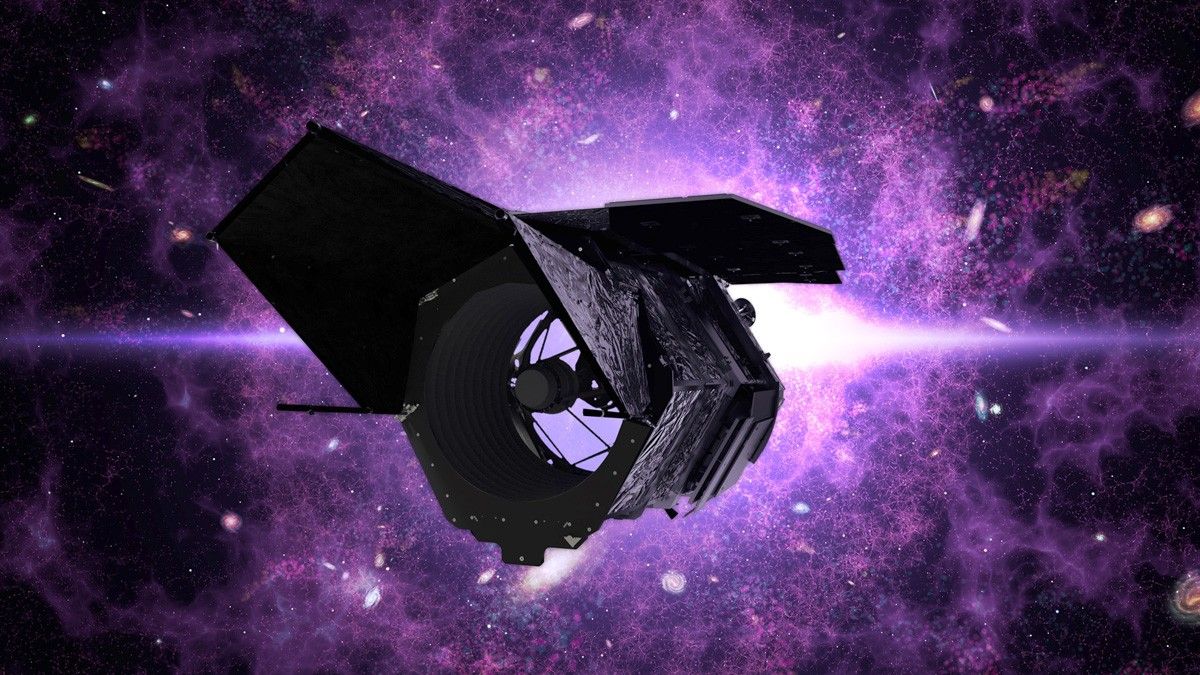
The Nancy Grace Roman Space Telescope is a new space observatory created by NASA, designed to help researchers explore the universe and answer questions about dark energy, exoplanets, and other aspects of astrophysics.
Scheduled to launch on August 30, 2026, from NASA's Kennedy Space Center in Florida aboard a SpaceX Falcon Heavy rocket, the telescope will orbit approximately 930,000 miles away in space around a special point called the second Sun-Earth Lagrange point (L2). This location provides the telescope with an unobstructed view of the universe.
The telescope is equipped with a 7.9-foot (2.4-meter) wide primary mirror that gathers light using infrared light, which is invisible to the human eye but can be felt as heat. This mirror sends light to two scientific instruments: the Wide Field Instrument and the Coronagraph Instrument.
The Wide Field Instrument, which is 300 megapixels, is an infrared camera that allows scientists to observe the universe as it was billions of years ago. By studying these early stages of the universe, researchers can gain insights into how it has expanded throughout its history and possibly predict its future evolution.
The Coronagraph Instrument is a powerful tool capable of blocking the light from stars, enabling astronomers to observe planets orbiting those stars. This instrument has never been used in space before and will be able to detect planets that are almost a billion times fainter than their host star.
Scientists using the Nancy Grace Roman Space Telescope will focus on three main areas: dark energy, exoplanets, and dark matter. Dark energy is a mysterious force that makes up about 68% of the universe, and it is believed to be responsible for the universe's accelerating expansion. Scientists hope to use the Roman Space Telescope to help understand the nature of dark energy better.
Exoplanets are planets outside of our solar system, and researchers have already discovered more than 6,000 of them. However, scientists expect the Roman Space Telescope to find even more unusual exoplanets and help identify those in the habitable zone of their stars, potentially leading to the discovery of planets similar to Earth.
Finally, dark matter is an invisible substance that holds the universe together, and its exact composition remains unknown. The Roman Space Telescope will allow researchers to study how galaxies and galaxy clusters formed, providing valuable information on how dark matter behaves under different conditions. By narrowing down the candidates for dark matter particles, scientists may eventually detect them directly in Earth-based experiments.
Written by urgent.news from NASA's reporting — not their text. Machine-written — may contain errors; check the original before relying on it.
This story
This is one outlet's version. Read the fullest account.