What Is the Nancy Grace Roman Space Telescope? (Grades 5-8)
This article is for students grades 5-8. The Nancy Grace Roman Space Telescope is NASA’s newest astrophysics observatory. The telescope will scan large sections of space. Roman will help astronomers answer questions about dark energy, dark matter, exoplanets, and more. ______________________________________________________________________ Words to Know Astrophysics: a branch of space science that…
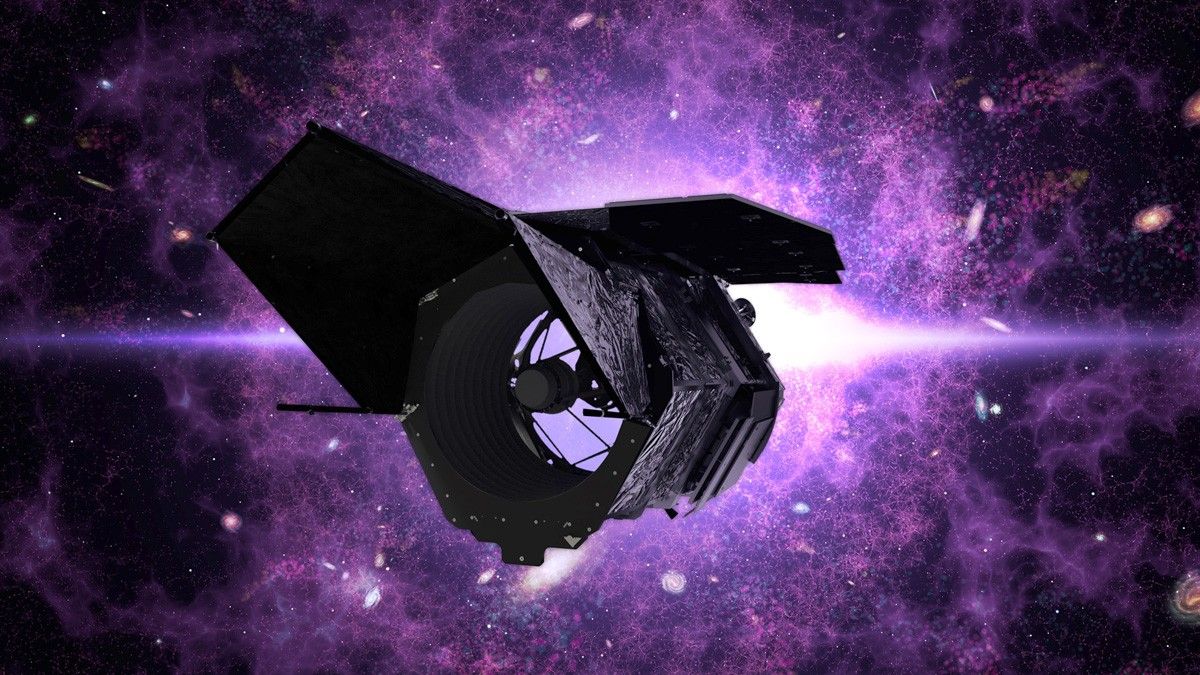
The Nancy Grace Roman Space Telescope is NASA's latest astrophysics observatory, scheduled to launch on August 30, 2026, from Kennedy Space Center in Florida. This telescope will study dark energy, exoplanets, and astrophysics by scanning large sections of space using infrared light. Its primary mirror is 7.9 feet (2.4 meters) in diameter, allowing it to gather more light and provide finer details.
The telescope will orbit around the second Sun-Earth Lagrange point (L2), where it will have an unobstructed view of the universe.
Upon arrival at L2, the telescope will carry two science instruments: the Wide Field Instrument, a 300-megapixel infrared camera, and the Coronagraph Instrument, which uses technology to block starlight and reveal planets. The Wide Field Instrument will help scientists observe the universe as it was billions of years ago, while the Coronagraph Instrument will allow them to detect planets that are extremely faint compared to their host stars.
Scientists will primarily focus on three areas during their studies: dark energy, exoplanets, and dark matter. Dark energy, which makes up about 68% of the universe, is responsible for the accelerating expansion of space. Exoplanets, or planets outside our solar system, have been discovered in increasing numbers, with many of them being quite different from those in our own solar system.
Lastly, dark matter, the invisible force that holds the universe together, is still largely unknown. By using the Nancy Grace Roman Space Telescope to study these three areas, scientists hope to gain a deeper understanding of our cosmic origins and the future evolution of the universe.
Written by urgent.news from NASA Science's reporting — not their text. Machine-written — may contain errors; check the original before relying on it.