With a feel for physics, AI models simulate a wider range of real-world scenarios
“GeoPT” helps AI models understand the basics of physics so they can simulate how objects respond to things like wind and water more efficiently and accurately.
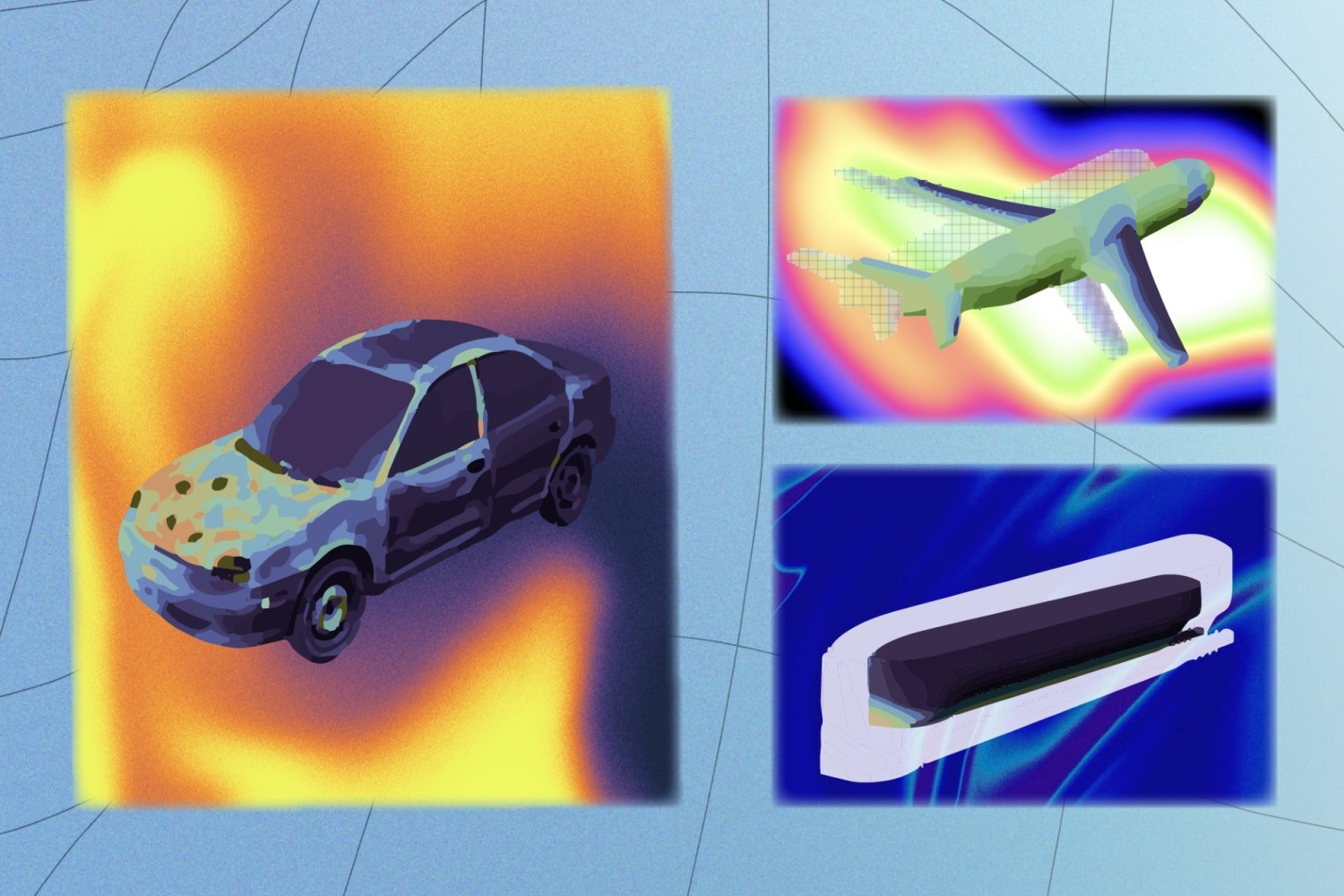
AI models are becoming more versatile, capable of tasks like writing, image generation, and 3D modeling. However, they struggle with simulating physical scenarios in diverse environments due to a lack of understanding of physics. To address this, researchers at MIT CSAIL and Tsinghua University developed a new pre-training approach called "GeoPT."
This method allows simulation models to learn physics more efficiently by virtually reenacting everyday mechanical interactions in 3D space. GeoPT utilizes synthetic dynamics, which involves interactions between small particles and complex 3D shapes, to help models grasp physical concepts. This approach enables the AI models to simulate various scenarios, such as how vehicles, everyday items, and robots respond to factors like wind, water, and collisions.
By using GeoPT, engineers can predict how objects will behave under different physical conditions, reducing the need for extensive physical experiments. The system has shown promising results, outperforming other models in terms of speed, accuracy, and efficiency, particularly in industrial scenarios. With further development, GeoPT could contribute to the creation of a physics foundation model, providing AI tools with a solid foundation in understanding and simulating the physical world.
Written by urgent.news from MIT News AI's reporting — not their text. Machine-written — may contain errors; check the original before relying on it.
This story
This is one outlet's version. Read the fullest account.