With a feel for physics, AI models simulate a wider range of real-world scenarios
“GeoPT” helps AI models understand the basics of physics so they can simulate how objects respond to things like wind and water more efficiently and accurately.
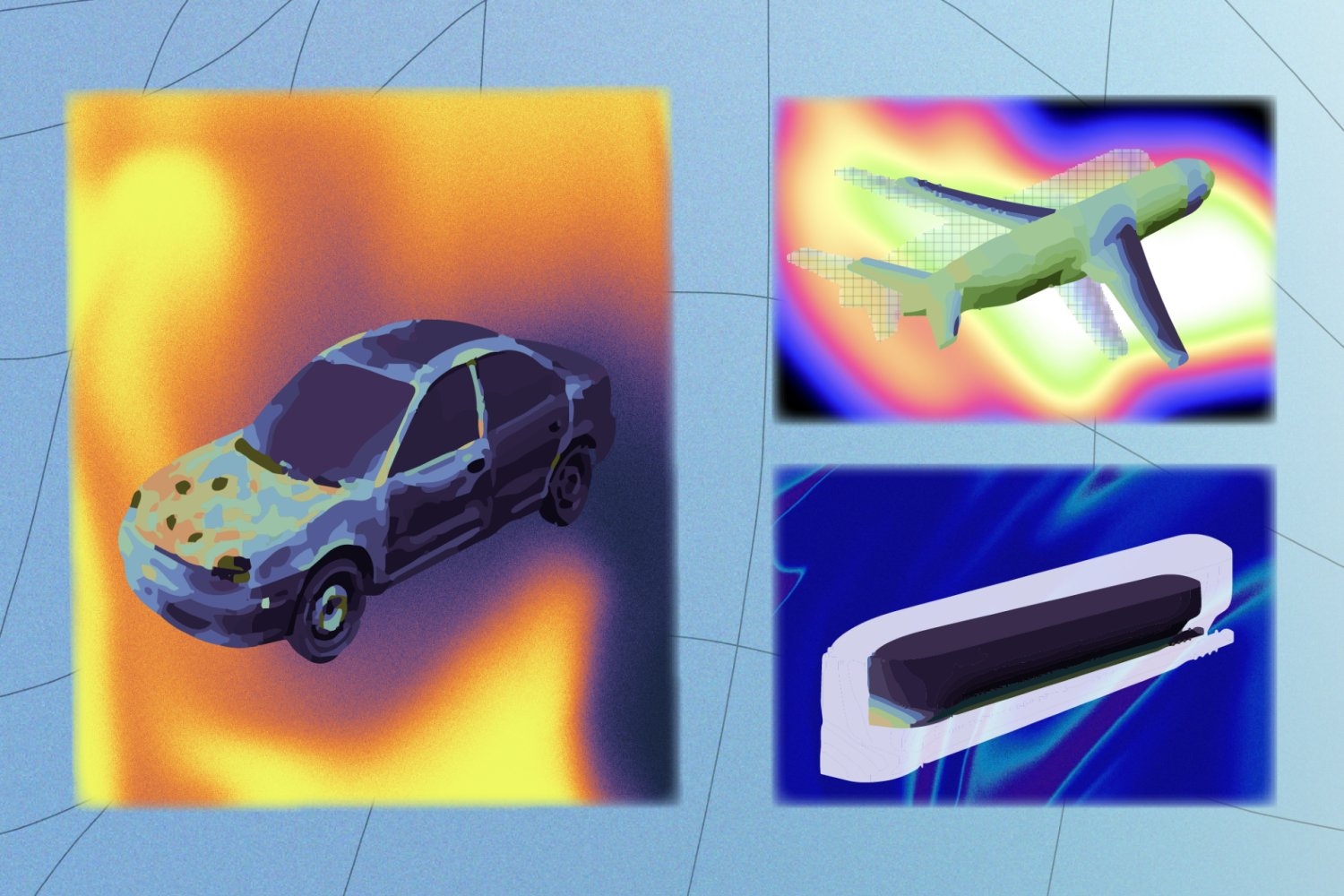
Artificial intelligence models excel at generating text and images, but struggle when it comes to simulating the physical world due to their limited understanding of physics. To address this issue, researchers at MIT's Computer Science and Artificial Intelligence Laboratory (CSAIL) and Tsinghua University have developed a new pre-training approach called "GeoPT."
This innovative method enables simulation models to learn physics in a broader, more efficient manner by virtually reenacting everyday mechanical interactions in 3D. By doing so, GeoPT provides AI models with a better grasp of how physics works, allowing them to perform twice as fast and with up to 60% less data compared to leading models.
The ultimate goal of GeoPT is to create a physics-based foundation model, which could help AI tools generalize to various tasks and improve their performance in simulating real-world scenarios. To use GeoPT, users simply upload 3D models of objects and specify the direction and speed of the force they want to simulate. GeoPT then generates a heat map showing how the object will be affected in different places.
The researchers tested GeoPT's capabilities in simulating industrial scenarios, such as the response of fighter jets to wind currents and surface pressure, and found that it outperformed state-of-the-art models in terms of speed, accuracy, and efficiency. GeoPT requires significantly fewer labeled data to reach peak performance and can successfully simulate how 3D vehicles would deform after colliding with another object or how light would pass through a toy rabbit.
As the researchers continue to refine their system, they hope to scale up GeoPT and expand its capabilities to include more complex physical phenomena and applications.
Written by urgent.news from MIT News Research's reporting — not their text. Machine-written — may contain errors; check the original before relying on it.