Rush to find solar eclipse glasses as UK high street stocks run short
Some online shoppers may have left it too late to order – but you can view partial eclipse indirectly without specs A frantic rush is on across the UK to find the right kind of protective eyewear ahead of Wednesday’s partial solar eclipse. High street stores are running out of eclipse glasses and online shoppers who track down a pair are being told they may not reach them until the end of the…
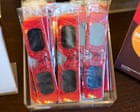
A scramble is underway in the UK to secure protective eyewear for Wednesday’s partial solar eclipse, with high street outlets and online retailers running low on eclipse glasses. Stores such as Robert Dyas and Amazon warn that free delivery is scheduled for Thursday 13 August, highlighting the urgency. The Royal Observatory Greenwich reports having sold out of glasses both online and in physical stores due to a surge in demand.
Ordinary sunglasses are deemed unsafe to view the eclipse, and experts have promoted specialized glasses instead. However, finding a pair can prove challenging; Emma from Tonbridge, Kent, describes her unsuccessful search at various shops and a hung-up call to her optician. One astronomer, Neill Sanders, notes that the shortage is a result of procrastination rather than a genuine lack of supply, as he has shipped 300,000 pairs to astronomy groups.
Nevertheless, the last-minute orders have exhausted most of his remaining stock. While indirect viewing methods, such as using a colander or paper with a small hole, are suggested, experts advise caution and emphasize the importance of using correctly certified eclipse glasses to protect one’s eyes.
Written by urgent.news from Guardian Science's reporting — not their text. Machine-written — may contain errors; check the original before relying on it.
This story
This is one outlet's version. Read the fullest account.