Illegal mining pulling Ghana’s school children out of classrooms and into hazardous labour
A recent study conducted by Solidaridad West Africa and the Minerals Commission across four mining communities, Pameng, Asamang, Akwaboaso and Abrenya, in the Atiwa West District of the Eastern Region has revealed that school children are increasingly abandoning classrooms for mining sites in search of quick income to support their families. The study conducted in […]
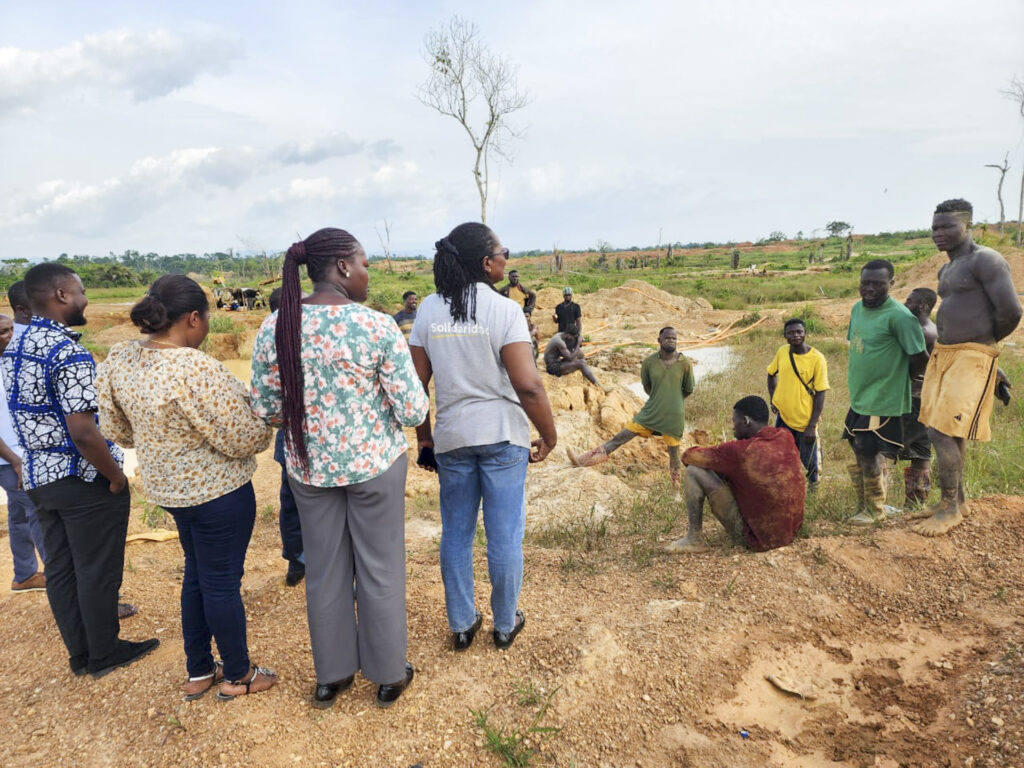
A recent study conducted by Solidaridad West Africa and the Minerals Commission has found that school children in Ghana are being drawn away from classrooms and into hazardous mining work to help support their families. The study, carried out in April 2026, examined four mining communities in the Atiwa West District of the Eastern Region and revealed that children aged 10 to 17 are working under dangerous conditions, exposed to unsafe pits, machinery, mercury, and other toxic chemicals.
While poverty is a major factor driving children into mining, the study also found that behavioural and social influences, such as peer pressure, quick income desires, weak parental supervision, and a belief that education offers little immediate benefit, contribute to the trend. Some children reported earning between GH₵100 and GH₵1,000 a day, depending on the work and access to mining profits.
The study noted that while some families see this as a source of income, it often results in child labour, interrupted education, and limited future opportunities. The decline in school attendance and enrollment threatens children's safety today and the social and economic future of generations to come. Education officials warn that children's involvement in illegal mining is widespread across the district, leading to absenteeism, dropouts, and a belief that education is less valuable than immediate financial gain.
The study used a participatory approach, including interviews, discussions, and field observations, to understand the dynamics of child labour in the communities. Solidaridad and the Minerals Commission are now piloting an incentive-based initiative to promote child labour-free communities, strengthen local child protection systems, build sustainable livelihood alternatives, and foster community ownership in protecting children.
Written by urgent.news from Joy Business's reporting — not their text. Machine-written — may contain errors; check the original before relying on it.
This story
This is one outlet's version. Read the fullest account.