Yemen's Houthis claim attack on Saudi Arabia refinery
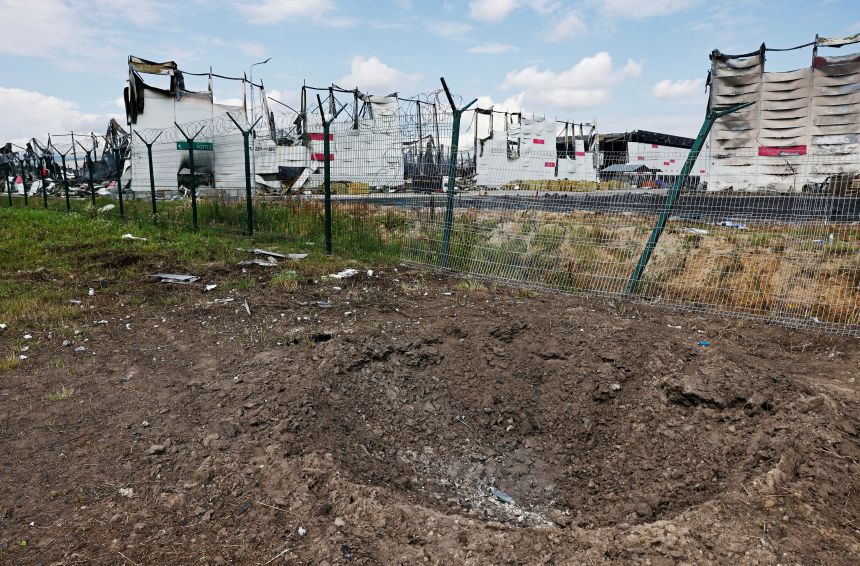
Yemen's Iran-aligned Houthis claim a drone attack on a Red Sea Coast refinery in Saudi Arabia. Attacks from the armed group have increased since the 2022 truce seems to have been broken last month.
On Friday, Saudi Arabia, Pakistan, and Turkey signed the Mecca Pact, a mutual defense treaty that drastically alters the Middle East's security architecture. The announcement came just a day after Indian Prime Minister Narendra Modi spoke with Israeli Prime Minister Benjamin Netanyahu, discussing recent developments in West Asia. While the treaty's full implications were not immediately clear, Modi and Netanyahu were likely discussing the region's shifting dynamics.
Modi emphasized the progress in the India-Israel Special Strategic Partnership, which will be further fueled by the Mecca Pact. This advancement in the partnership is a result of actions, such as the new defense alignment, sparking new arrangements. The US, the superpower that has long pushed for a US-led regional security architecture, appears to be losing influence, prompting regional powers to forge their own alliances.
While Saudi Arabia, Pakistan, and Turkey's defense pact contains a NATO-style Article 5 clause, its impact on Israel is particularly concerning. Saudi Arabia's choice to join the alliance with Turkey and Pakistan, which complicates Jerusalem's regional strategy, is deeply disappointing for Israel. The Saudi-Pakistani defense ties, although not new, provide a stark reminder of the potential dangers posed by the new trilateral alliance.
Adding to the concerns, the Mecca Pact raises alarm in New Delhi due to Pakistan's historical support for India's arch-rival, arch-enemy, and nuclear-armed neighbor, Pakistan. As the Saudi Arabia-Iran conflict intensifies, the Saudi-Pakistan-Turkey axis becomes an even more potent threat to India's security interests.
The Turkey-Saudi alliance also poses economic challenges for Israel and India, as the Saudi Arabia's central location in the India-Middle East-Europe Economic Corridor (IMEC) may now be compromised. The exclusion of Turkey from the original IMEC route, coupled with Turkey's promotion of a rival transit project, indicates that Ankara seeks to gain influence over a country central to India and Israel's economic endeavors.
Lastly, the Mecca Pact complicates the path toward Saudi-Israel normalization. By forging closer ties with Ankara and Islamabad, Riyadh enters a strategic framework that opposes any Saudi moves toward the Abraham Accords. While Turkey and Pakistan do not have a formal veto over Saudi policy, the political and strategic price for Riyadh to normalize relations with Israel increases significantly.
Written by urgent.news from Jerusalem Post's reporting — not their text. Machine-written — may contain errors; check the original before relying on it.
This story
This is one outlet's version. Read the fullest account.
- No need to overread the Middle East’s marriages of convenience asiatimes.com
- How Yemen factors into wider conflict in the Middle East egyptindependent.com
- Yemen’s Houthis claim attack on Aramco oil facility in Saudi Arabia, and other Middle East news apnews.com
- Kaya, the Middle East's first walrus calf, doing well at Seaworld Yas Island, Abu Dhabi thenationalnews.com
- Yemen's Houthis claim attack on Aramco oil facility in Saudi Arabia, and other Middle East news npr.org
- India-Israel ties will bloom amid Middle East's new Mecca Pact - analysis jpost.com
- Yemen's Houthis claim attack on Aramco oil facility in Saudi Arabia cbc.ca
- Kuwait reaffirms support for Saudi Arabia, backs measures to protect sovereignty english.ajel.sa