The world's biggest solar telescope caught vortexes on the Sun's surface
We expected them to be there, but they had previously been too small to see.
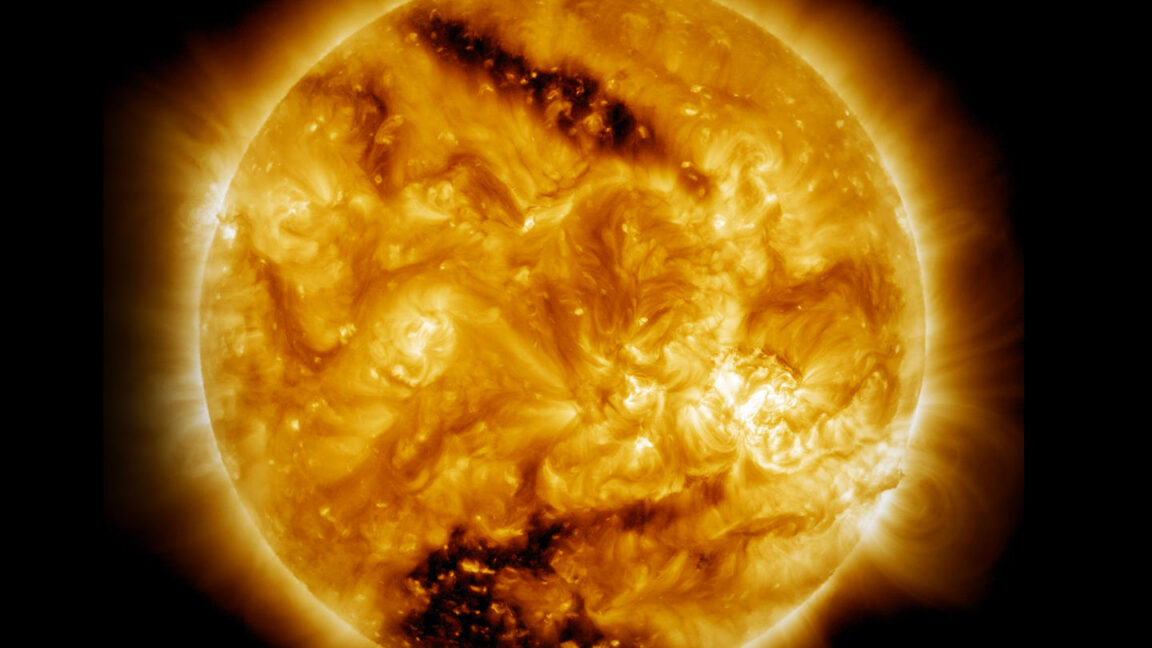
The world's largest solar telescope recently captured vortexes on the Sun's surface, a phenomenon known as Kelvin-Helmholtz instabilities. These instabilities arise wherever fluids with differing speeds meet, causing the boundary between them to buckle, curl, and roll up. The physics behind this phenomenon was established in the late 1860s, and scientists have long hypothesized that similar instabilities occur on the Sun's surface.
However, confirming this theory proved challenging due to the small scale of the instabilities, which are below the resolution of most Earth-based telescopes. The situation changed with the opening of the Daniel K. Inouye Solar Telescope in Hawaii, the world's largest solar telescope, which entered operational phase in November 2021.
A team led by David Kuridze and Friedrich Wöger from the National Solar Observatory confirmed that these instabilities are not only present but ubiquitous on the Sun's surface. This discovery could potentially alter our understanding of heat, mass, and magnetic energy transfer through the Sun's atmosphere.
Written by urgent.news from Ars Technica's reporting — not their text. Machine-written — may contain errors; check the original before relying on it.
This story
This is one outlet's version. Read the fullest account.