Where to buy last-minute solar eclipse glasses and viewing gear before August 12
A partial eclipse is still worth seeing, but only with the right protection. Here's where you can still find eclipse glasses, solar binoculars and filters before eclipse day.
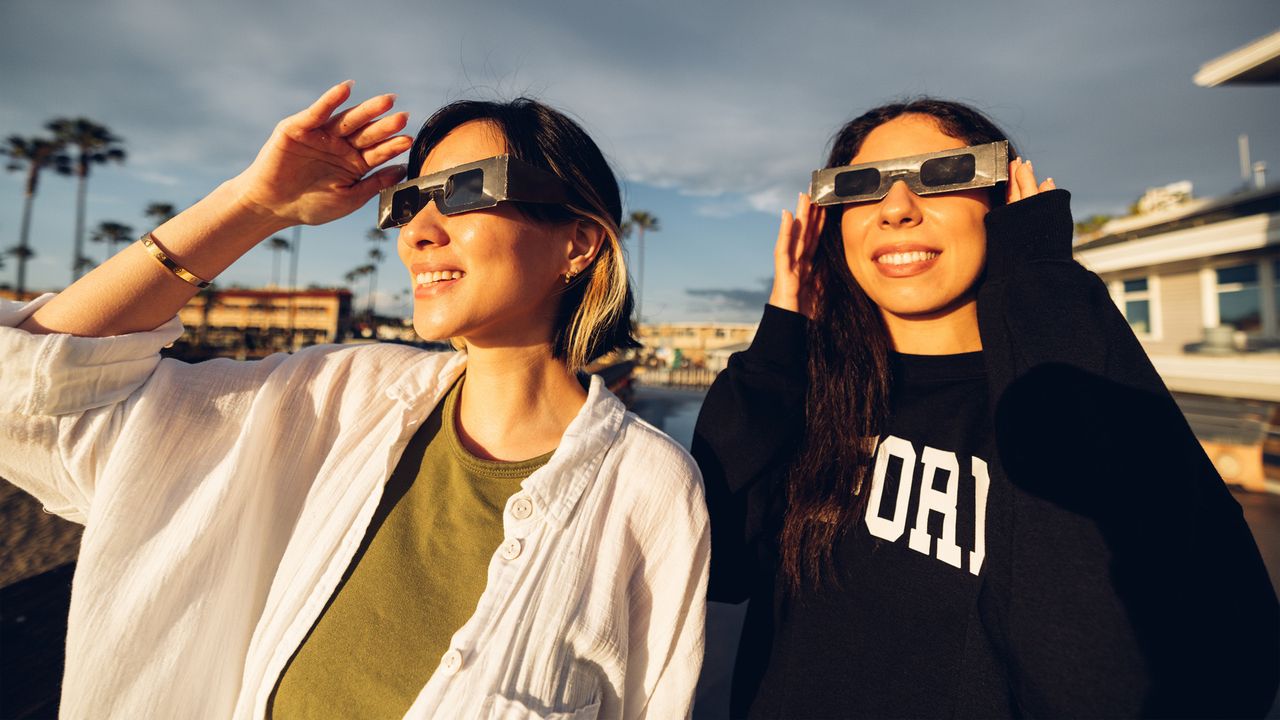
As the solar eclipse of August 12 approaches, many Americans are scrambling to find certified solar glasses or binoculars to safely view the partial phases of the celestial event. Even though the eclipse won't be particularly impressive to U.S. observers, it's crucial to protect one's eyesight. The American Astronomical Society advises that ISO 12312-2 certified solar viewing equipment is necessary for a safe and comfortable experience.
With the eclipse rapidly approaching, some retailers are already running low on stock and may not be able to deliver before Wednesday, August 12. However, there are still options available for those who want to secure their solar viewing gear in time. Lunt offers a 5-pack of ISO 12312-2 certified solar eclipse glasses, perfect for viewing parties, families, or as spare pairs for future eclipses. Prime members can take advantage of free next-day delivery.
Another affordable option is the 2-pack of solar glasses from Soluna, which is also ISO 12312-2 certified and available for same-day delivery in certain areas. This budget-friendly choice allows families or individuals to easily share the viewing experience.
For those who prefer solar binoculars, the Celestron EclipSmart 12x50 model provides safe solar viewing with 12x magnification. Prime members have the opportunity to receive these before the eclipse, although there's a potential drawback. Historically, these binoculars have been priced lower at a few months' notice, as seen in last October's price drop to $26.82.
While they may be necessary for the upcoming eclipse, it might be wise to consider purchasing them in advance when they're more affordable and ready for future solar events.
Written by urgent.news from Live Science's reporting — not their text. Machine-written — may contain errors; check the original before relying on it.