The world's biggest solar telescope caught vortexes on the Sun's surface
We expected them to be there, but they had previously been too small to see.
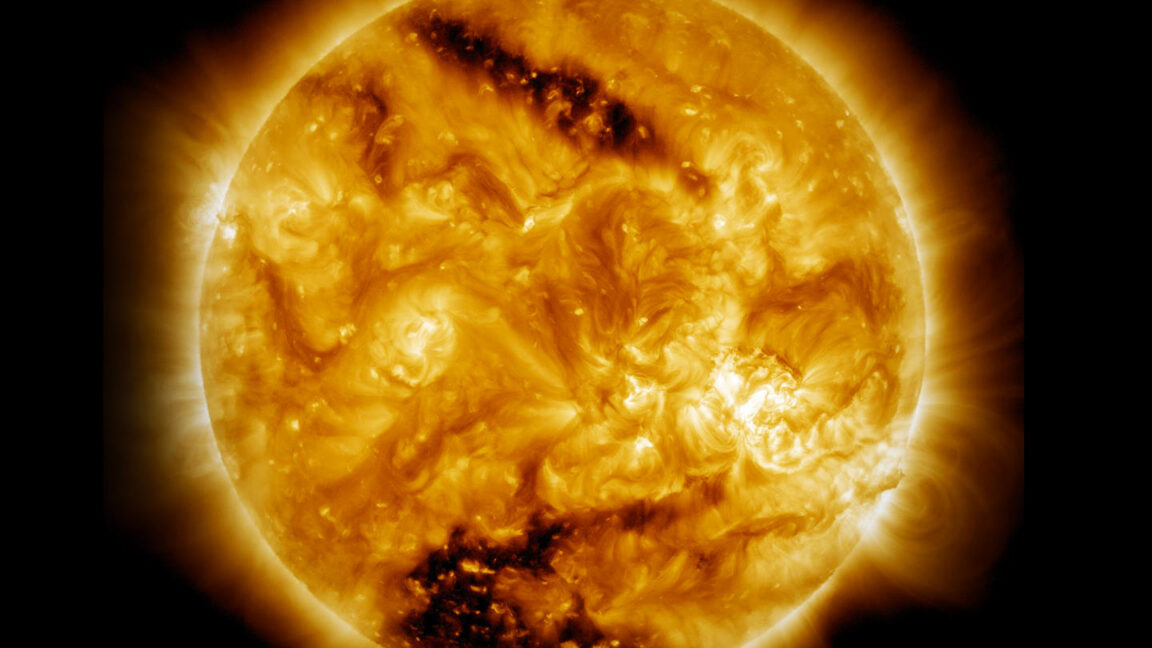
Scientists have discovered intricate vortex structures within the Sun's surface, challenging previous assumptions about heat and energy transfer mechanisms. The phenomenon, known as Kelvin-Helmholtz instability, has eluded detection due to its minuscule scale. This instability occurs when two fluids of different speeds interact, causing boundary disturbances that form vortices.
Initially, researchers postulated this process could manifest in plasma on the Sun's surface, yet conclusive evidence remained elusive. The breakthrough in identifying these vortexes was made possible by the advent of the Daniel K. Inouye Solar Telescope in Hawaii, an advanced 4-meter instrument that marked a significant leap in solar observation capabilities.
With its operational initiation in November 2021, the telescope's enhanced resolution enabled the observation and documentation of these elusive plasma whirlpools. Researchers from the National Solar Observatory, including lead investigators David Kuridze and Friedrich Wöger, have detailed their findings, suggesting that the existence of these vortices could fundamentally alter our understanding of solar dynamics, particularly in the realms of heat, mass, and magnetic energy distribution.
Written by urgent.news from Ars Technica Science's reporting — not their text. Machine-written — may contain errors; check the original before relying on it.
This story
This is one outlet's version. Read the fullest account.