How excessive police force turns peaceful marches into medical crises
In India, information on the crowd control devices that security personnel possess and use is not easily available. Regular audits are necessary to ensure these devices meet quality standards and tests should be conducted in a manner that reveals the weapons’ full impact before they are deployed, per the UN guidance.
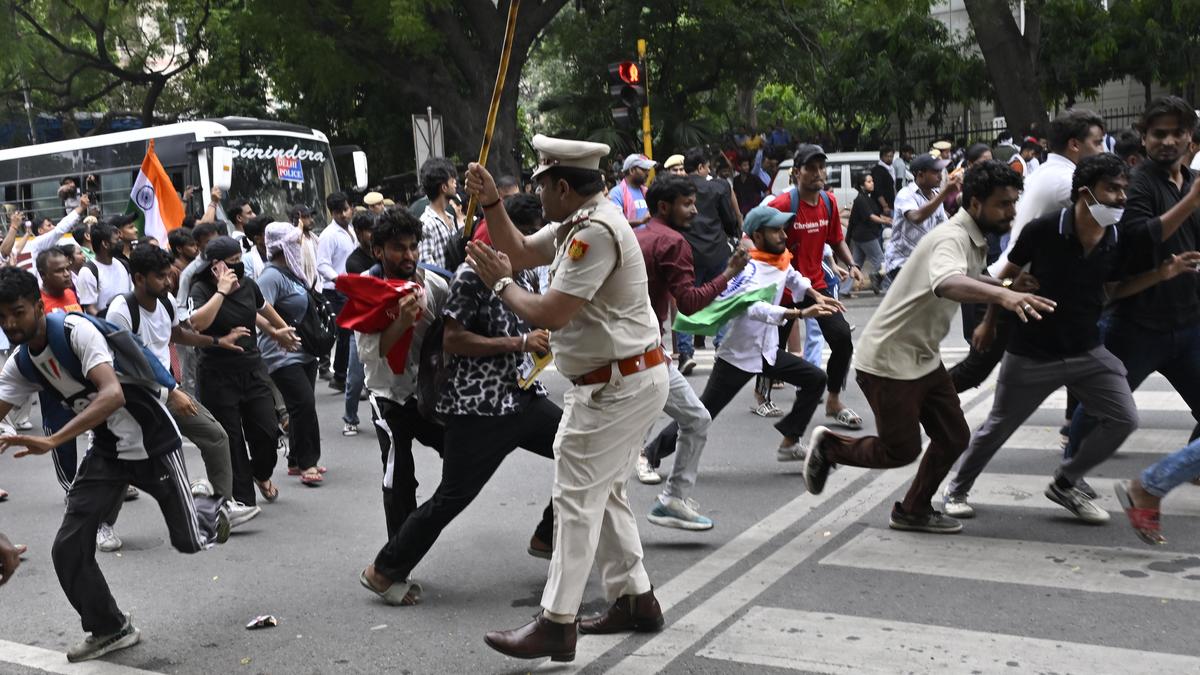
The July 20 protest march in New Delhi, known as the Cockroach Janta Party (CJP) demonstration, turned into a medical crisis due to excessive use of police force. A 23-year-old participant, Arhaan, experienced severe ear pain and temporary loss of consciousness after a canister burst near him, leading to a series of protests marred by police violence.
The Delhi police and security forces have been accused of using lathis, tear gas, pellet guns, and shock batons against peaceful demonstrators. While security forces deny these allegations, transparency regarding crowd control measures remains lacking. These less-lethal crowd control measures, although designed to minimize harm, can have severe long-term consequences on health, as revealed by systematic reviews conducted by the U.S.-based Physicians for Human Rights (PHR).
These reviews, published in 2017, found that injuries affected nearly every organ system, ranging from transient symptoms to lifelong disability and even death. Despite regulations requiring escalation of less-lethal measures only when the crowd does not disperse or becomes violent, the lack of guidelines on device composition and deployment protocols raises concerns.
Tear gas, a common chemical irritant, can cause chronic respiratory disease, persistent eye injuries, skin conditions, and psychological effects like PTSD. In 2025, a study in Toxicology Reports reported higher ECG abnormalities in those exposed to tear gas during a protest in Georgia. Additionally, grenade launchers used by security forces to deploy tear gas canisters, capable of firing multiple canisters rapidly, pose significant risks of head injuries.
The use of kinetic weapons such as lathis or batons, meant for use against violent protestors with executive magistrate approval, often leads to injuries from improper training and excessive force, particularly against vulnerable groups like women, children, and the elderly. Shock batons, which deliver a mild electric shock, have also been deployed for the first time during the CJP march, raising further concerns about permanent disability and death.
Kinetic impact projectiles, including plastic or rubber bullets with metal fragments, have been used indiscriminately, causing severe injuries and even vision loss. Human rights groups have called for the banning of these batons and projectiles due to their potential for causing permanent harm.
Written by urgent.news from The Hindu Health's reporting — not their text. Machine-written — may contain errors; check the original before relying on it.