How excessive police force turns peaceful marches into medical crises
In India, information on the crowd control devices that security personnel possess and use is not easily available. Regular audits are necessary to ensure these devices meet quality standards and tests should be conducted in a manner that reveals the weapons’ full impact before they are deployed, per the UN guidance.
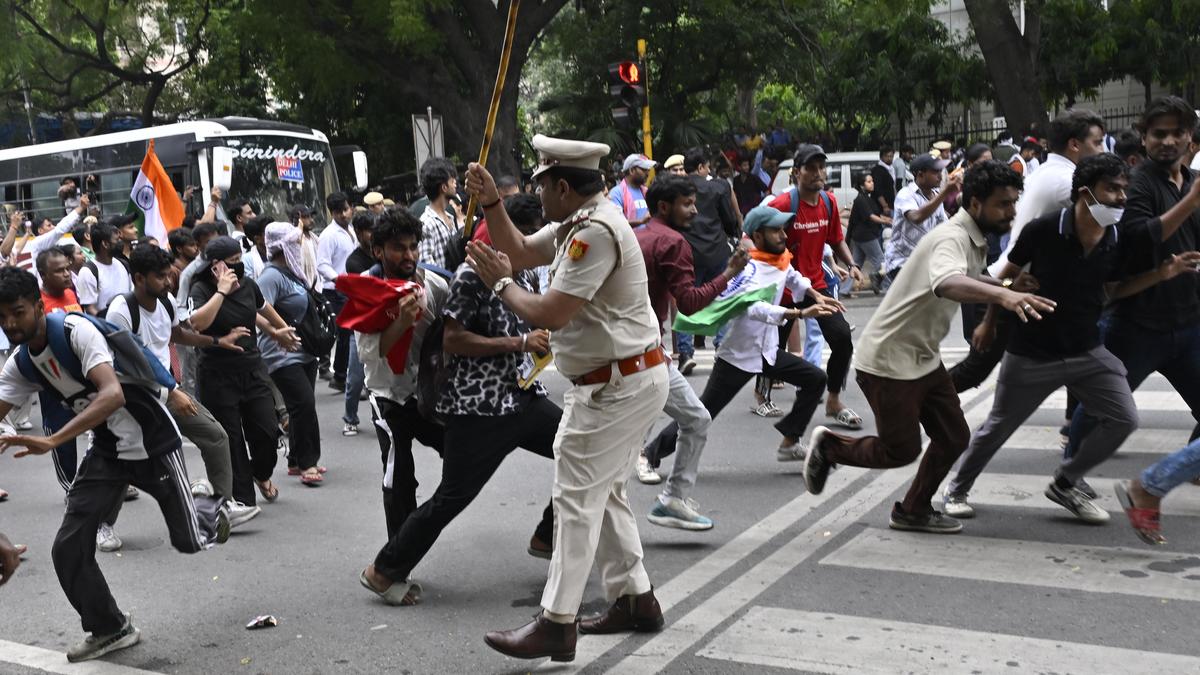
In the aftermath of the Cockroach Janta Party protest march in New Delhi on July 20, a 23-year-old man named Arhaan found himself grappling with the lingering effects of excessive police force. The protest, organized by the CJP, saw the deployment of various less-lethal crowd control measures by the Delhi police and security personnel, including lathis, tear gas, pellet guns, and shock batons.
Arhaan himself recounted the incident that sparked his ordeal – a burst canister near his head, causing him to black out for a minute before fleeing as the police resorted to lathi charges.
The use of these less-lethal weapons, while intended to maintain crowd control, has been linked to severe long-term health consequences, according to the U.S.-based nonprofit Physicians for Human Rights (PHR). A 2017 review of these devices found that they can affect nearly every organ system, from transient symptoms to lifelong disability and even death.
The law governing their use in India stipulates that the intensity and type of these measures can only escalate if the crowd does not disperse or becomes violent. However, the regulations lack clarity on the materials used in these devices and the conditions under which they can be deployed, potentially leading to deadly outcomes.
Tear gas, a common chemical irritant, can cause intense coughing, nausea, chest tightness, and muscular weakness. Another compound, PAVA, a synthetic pepper spray, can lead to chronic respiratory disease, persistent eye injuries, skin conditions, and psychological effects like PTSD. Tear gas should ideally be used in areas with good ventilation and where protesters can safely escape the spray.
Yet, when used in confined spaces, it poses a higher risk, especially for individuals with pre-existing respiratory conditions or allergies.
Handheld kinetic weapons, including lathis, have also been implicated in causing permanent disability and nerve damage. Reports from the Kerala Police Manual and UN Guidance on Less-Lethal Weapons emphasize the need for proper training and the avoidance of striking vulnerable body parts. Shock batons, recently introduced in the national capital, release a mild electric shock and have been criticized for their potential to cause permanent disability and even death.
Similarly, kinetic impact projectiles, such as plastic or rubber bullets, have been linked to indiscriminate harm, with one individual losing vision due to such an injury. These projectiles are inaccurate, particularly at long distances, and can cause harm beyond the intended targets.
Written by urgent.news from The Hindu's reporting — not their text. Machine-written — may contain errors; check the original before relying on it.
This story
This is one outlet's version. Read the fullest account.