New images of the sun show strange patterns rippling on surface
Scientists have captured images of the sun’s surface in the finest detail yet, revealing a strange and dynamic facade. It is dangerous to look directly at the sun without proper eye protection. But researchers were able to peek at its scorching surface with the help of the National Science Foundation’s Daniel K. Inouye Solar Telescope, located on the island of Maui in Hawaii. Scientists…
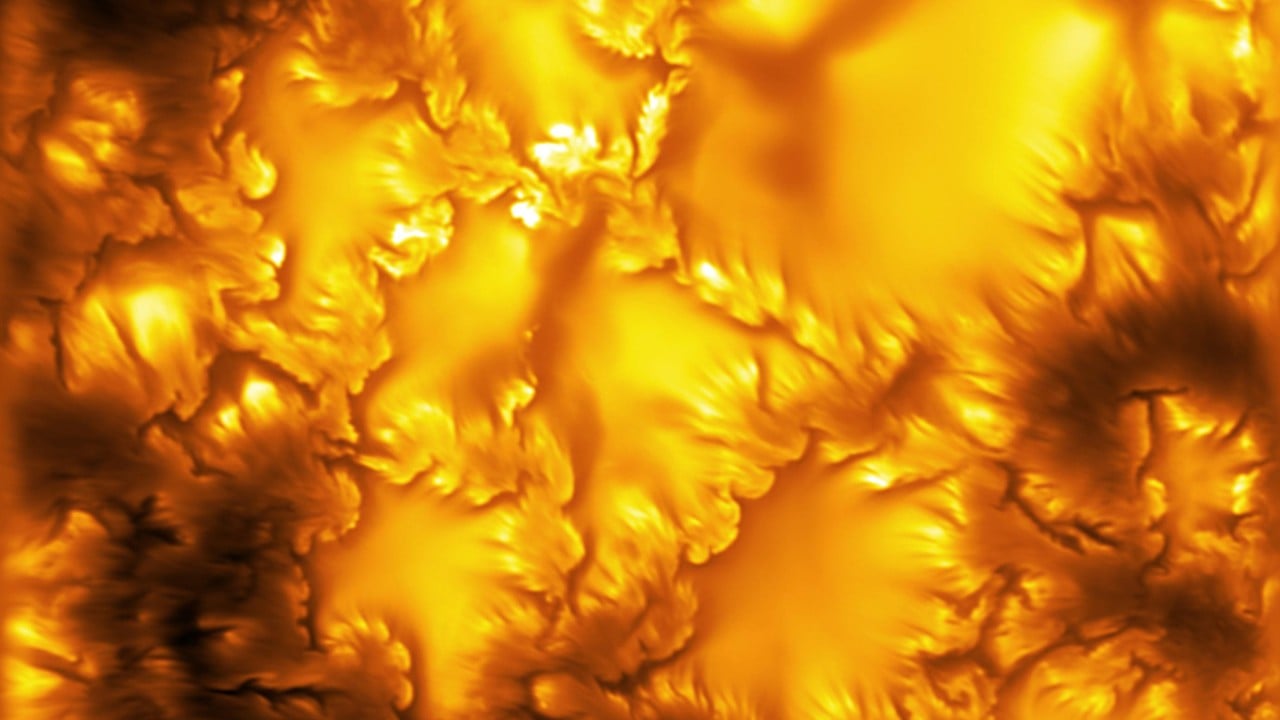
For the first time, scientists have captured breathtaking images of the sun's surface in unprecedented detail, unveiling a mesmerizing display of strange patterns rippling across its face. Operating under strict safety protocols, researchers peered at the scorching solar surface using the National Science Foundation’s cutting-edge Daniel K. Inouye Solar Telescope, situated on the Hawaiian island of Maui.
Initially, the images were taken to refine and test the telescope's capabilities, but an unexpected discovery emerged: the sun's glowing outer layer had been captured at a resolution never before achieved.
Solar physicist Ruizhu Chen, from Stanford University, likened the observed patterns to Van Gogh's swirling skies in "Starry Night," marveling at the resemblance. The images revealed instabilities in the sun's surface, caused by bits of magnetized plasma moving at varying speeds, akin to waves caused by wind over water. This fluid-like behavior, while familiar on Earth and other planets, had never been observed in such detail on the sun's surface, according to study co-author Friedrich Woger, from the National Solar Observatory.
The revelation has sparked curiosity among scientists, who aim to unravel the sun's inner workings to better predict and mitigate the impact of massive energy bursts called coronal mass ejections. These ejections can hurl towards Earth, triggering solar storms that have the potential to disrupt GPS communications and create dazzling auroras.
The new findings, published in the journal Nature, provide valuable insights into the sun's dynamic behavior, enhancing our ability to safeguard our technological infrastructure and appreciate the celestial wonders that surround us.
Written by urgent.news from South China Morning Post's reporting — not their text. Machine-written — may contain errors; check the original before relying on it.