Everyone’s afraid of mountain lions. The data says be afraid of deer instead.
A five-year study finds the big cats you avoid on trails are quietly preventing the collisions that actually kill people.
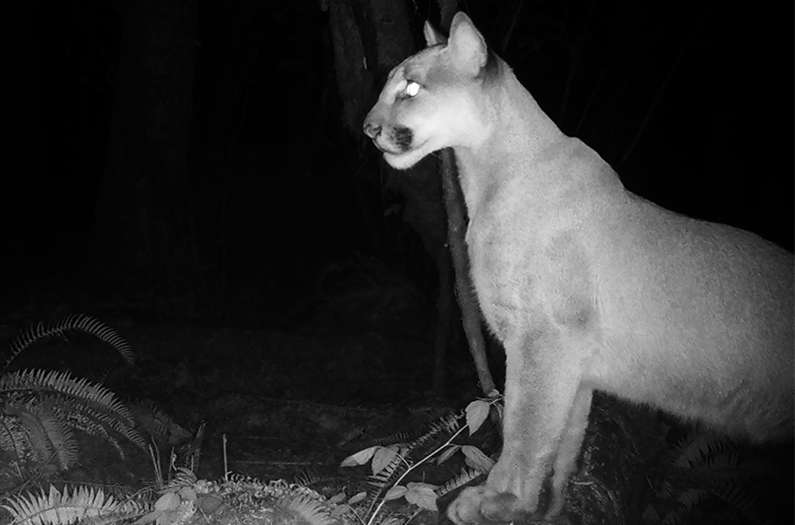
When contemplating the presence of mountain lions in our vicinity, concerns about their threat often take precedence. However, new research suggests these big cats may also be playing a role in enhancing our safety. According to a study published in Current Biology, an increase in mountain lion populations in an area can lead to fewer deer-related car accidents, as detailed by ecologist Mark Elbroch, who spearheaded the research for conservation group Panthera.
Elbroch emphasized that living alongside large carnivores offers more than just wildlife protection; it provides numerous unnoticeable benefits to us.
The study's findings mirror the well-known case of how wolves helped restore Yellowstone's vegetation by controlling overabundant elk populations. In Washington state's Olympic Peninsula, researchers discovered an unexpected connection between mountain lions and automobiles. This revelation stemmed from years of tracking both deer and mountain lion populations, led by native peninsula tribes, and involved wildlife cameras and GPS collars on 59 mountain lions.
By analyzing data from over 500 camera locations and 59 mountain lions, combined with nearly 1,000 car-wildlife collisions from 2020 to 2025, researchers identified a significant correlation. The locations of these collisions, accounting for over 80 injuries, two fatalities, and $14.7 million in damage, were not merely due to deer abundance or human development. However, when mountain lion data was integrated, it became evident that these predators played a crucial role in reducing car-deer collisions.
The study found that areas with relatively high mountain lion activity experienced a 67% decrease in car-deer collisions. Overall, the presence of mountain lions in a region led to a 76% reduction in expected collisions over five years, according to their models. The researchers hypothesize that this is because deer modify their behavior and habitat usage when mountain lions are nearby, similar to how they adjust when people are present.
Specifically, deer reduce their road crossings and activity at night, when most of these accidents occur.
Ecologist Justin Suraci, from Conservation Science Partners, noted that mountain lions alter deer movement patterns, causing them to occupy less of the road space and be less active at night. Suraci emphasized that this increased road safety represents an ecosystem service provided by large predators like mountain lions to human communities. Conservation advocates hope these findings will help highlight the benefits of preserving such species, which often gain negative attention only when they directly threaten humans.
In the U.S., deer pose a far greater threat to motorists than mountain lions. A 2011 study by the U.S. Geological Survey indicated that during the 1990s peak of mountain lion encounters, there were approximately 5 injuries and 1 fatality annually in North America. In contrast, 2024 saw over 200 fatalities resulting from car accidents involving wildlife, predominantly deer. Suraci and his team concluded, "Large carnivores shape road safety through effects on prey space use," published in Current Biology on August 5, 2026.
Written by urgent.news from Anthropocene Magazine's reporting — not their text. Machine-written — may contain errors; check the original before relying on it.