D-Wave shows off its new entry in quantum computing race
Company noted for building quantum annealers now also making gate-based hardware.
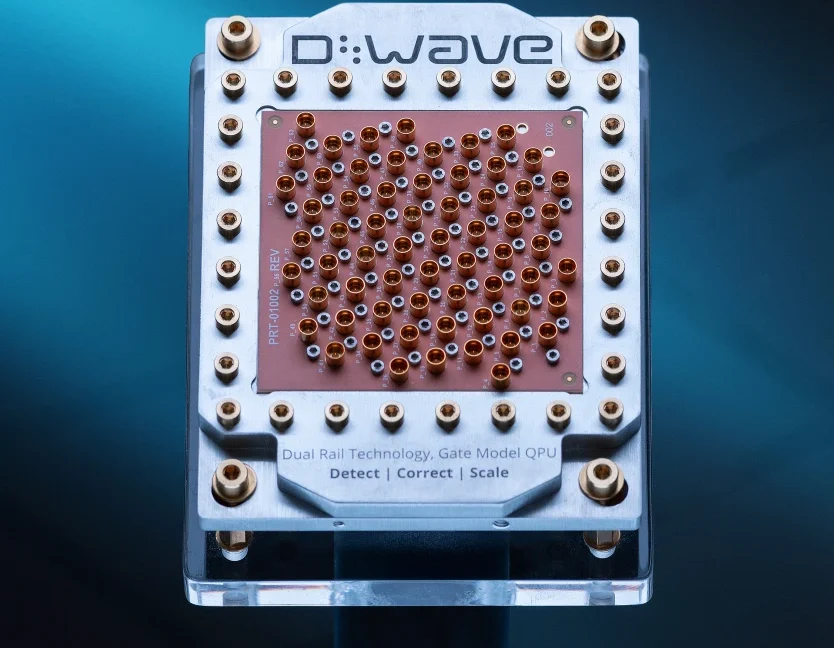
D-Wave, a company established in a previous era, initially did not produce quantum computers akin to those being developed by IBM or Google. Instead, the firm created a quantum annealer, a device designed not for general-purpose use but capable of addressing a broad spectrum of optimization challenges. Although the hardware shares some parallels with qubits employed in gate-based quantum computers, it functions in a fundamentally distinct manner.
A few years ago, D-Wave began concentrating on gate-based hardware, opting for an unconventional qubit technology known as fluxonium. This year, the company acquired a startup named Quantum Circuits, which had emerged from Yale University. This acquisition involves a dual-rail qubit technology, akin to the one utilized by Amazon, which is anticipated to facilitate the easy detection of most errors, thereby simplifying error correction processes.
On Wednesday, D-Wave is set to publish a paper in Nature that outlines a crucial stage in verifying this dual-rail technology, demonstrating that two qubits can be entangled without impacting their key advantage: Most qubits possess a single type that is readily detectable.
Written by urgent.news from Ars Technica Science's reporting — not their text. Machine-written — may contain errors; check the original before relying on it.
This story
This is one outlet's version. Read the fullest account.
- D-Wave shows off its new entry in quantum computing race arstechnica.com