D-Wave shows off its new entry in quantum computing race
Company noted for building quantum annealers now also making gate-based hardware.
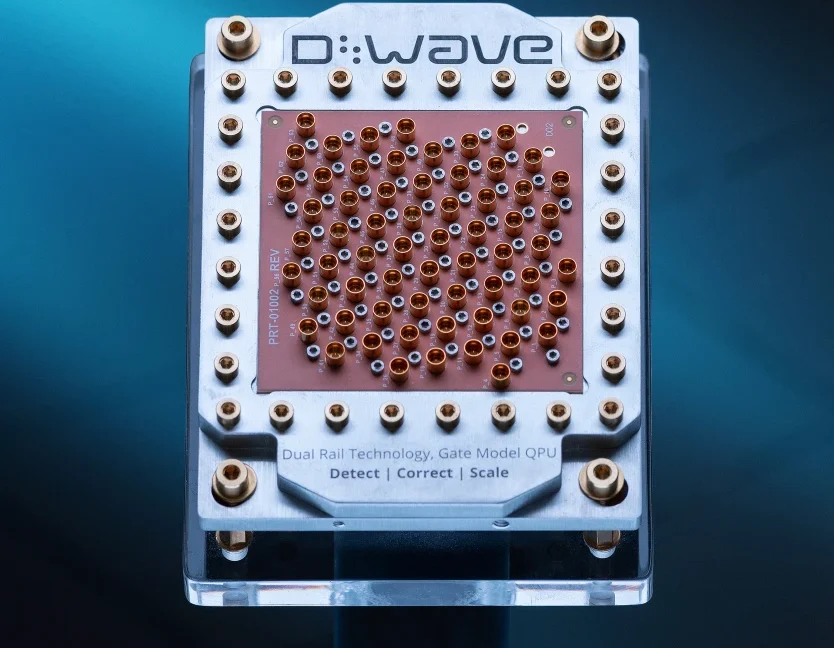
D-Wave, a pioneering entity in the quantum computing domain, initially did not venture into traditional quantum computing endeavors. Instead, the company engineered what is now recognized as a quantum annealer, a specialized machine adept at addressing intricate optimization conundrums. Despite sharing certain characteristics with qubits employed in gate-based quantum computers, its operational methodology differs significantly.
Several years ago, D-Wave embarked on a new trajectory, focusing on the development of gate-based hardware utilizing a unique qubit technology known as fluxonium. This year, the organization acquired Quantum Circuits, a venture that originated from Yale University and has been pioneering a dual-rail qubit, akin to the technology employed by Amazon.
This acquisition has piqued interest, as the dual-rail qubit is purported to render error detection remarkably straightforward, thereby expediting the process of error correction. Recently, D-Wave unveiled a paper in the prestigious journal Nature, detailing a crucial milestone in validating this dual-rail technology. The paper elucidates how the company successfully entangled two qubits without compromising their inherent strength: namely, that these qubits predominantly exhibit a single type, facilitating their swift identification.
Written by urgent.news from Ars Technica's reporting — not their text. Machine-written — may contain errors; check the original before relying on it.
Also reported by 1 other outlet
- D-Wave shows off its new entry in quantum computing race arstechnica.com