Silver-coated cicada wing amplifies molecular signals millions of times
Researchers developed a sensitive optical sensor using cicada wings and silver. This natural structure boosts weak molecular signals significantly, replacing expensive manufacturing. Silver coating on cicada wings creates tiny gaps that amplify light signals. This technology could lead to portable sensors for detecting pollution and toxins. Future studies will test these sensors with real-world…
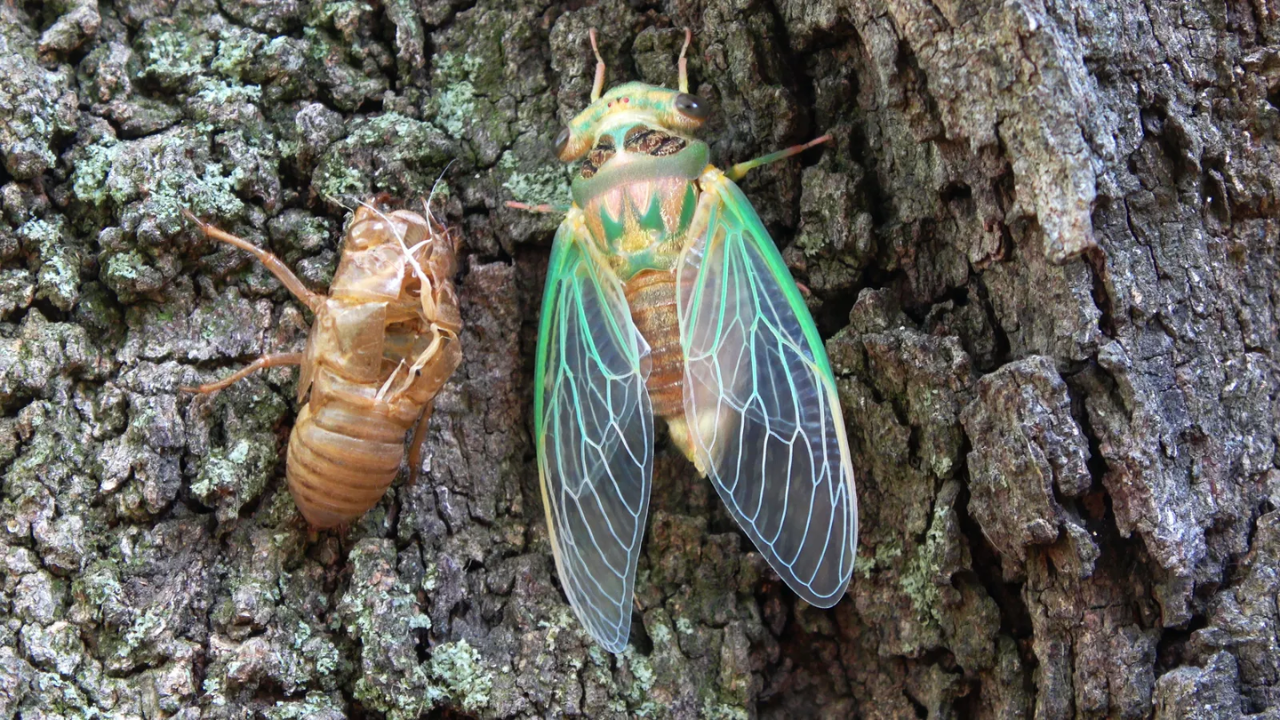
Researchers in Taiwan have developed a highly sensitive optical sensor by coating a cicada wing with a thin layer of silver, according to a study published in AIP Advances. The cicada wing, which appears transparent to the naked eye, actually has a natural nanoscale pattern of tiny pillar-like structures arranged in a hexagonal pattern.
This natural structure is well suited for surface-enhanced Raman spectroscopy, a technique that uses a laser to measure the scattered light produced by molecules, acting as a unique chemical fingerprint. Unlike expensive methods used to build high-precision chemical sensors, the cicada wing provides the same type of structure without requiring complex manufacturing processes.
The researchers found that a silver coating thickness of 45 nanometres created tiny five-nanometre gaps between the coated pillars, which acted as electromagnetic hot spots and amplified the optical signal from a standard test dye by tens of millions of times. While the technology is still in the proof-of-concept stage, the study suggests that other natural structures like butterfly wings or textured plant leaves could also be used to develop portable sensors for detecting environmental pollution, toxins, or disease-causing pathogens.
Written by urgent.news from Times of India's reporting — not their text. Machine-written — may contain errors; check the original before relying on it.