Stunning fossil from Australian outback reveals pliosaur killed a sea monster that had just eaten a pterosaur
Using advanced neutron imaging, researchers scanning fossils from Queensland uncovered clues about the complex food chain of prehistoric Earth.
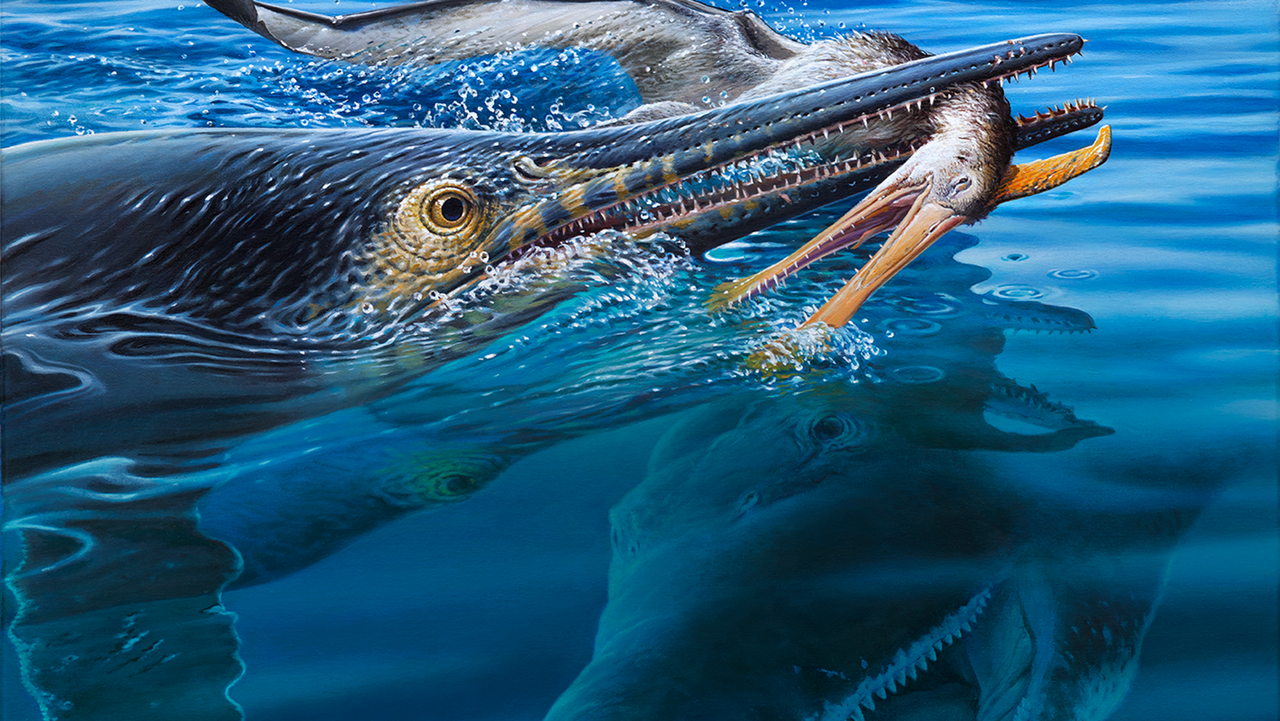
A groundbreaking fossil from Australia's outback has revealed a chilling scene from prehistoric times, where a massive marine reptile known as an ichthyosaur swallowed a pterosaur - a flying reptile that once ruled the skies - before falling victim to a giant ocean predator. Named "BOB" or "Bag of Bones," the fossilized remains of the ichthyosaur belong to a 20- to 23-foot-long (6 to 7 meters) creature that roamed the seas during the Mesozoic era, alongside the dinosaurs.
The discovery of pterosaur jaw fragments and other marine life remains within the ichthyosaur's body cavity is the first confirmed evidence of ichthyosaurs preying on pterosaurs. The fossil, discovered in 2019 in Queensland, showcases shattered bones, missing ribs, and significant injuries, suggesting the ichthyosaur met a violent end at the hands of a colossal crocodile-like predator called Kronosaurus queenslandicus, which once lived in the ancient Eromanga Sea.
The unique stomach contents of the fossil were preserved due to rapid burial, preventing decay and scattering of remains. Researchers used advanced neutron imaging to analyze the stomach contents, revealing hidden bones and helping them determine the remains were associated with the ichthyosaur's digestive system. The findings offer a rare glimpse into the food web of the ancient Eromanga Sea, where ichthyosaurs occasionally feasted on flying reptiles that either landed on water or floated to the surface after death.
Written by urgent.news from Live Science's reporting — not their text. Machine-written — may contain errors; check the original before relying on it.