Kerala hit by monsoon landslides | Explained
Kerala receives around 3,000 mm of annual rainfall, often in uneven, high-intensity spells that are becoming more frequent and extreme, exacerbated by global warming and climate change
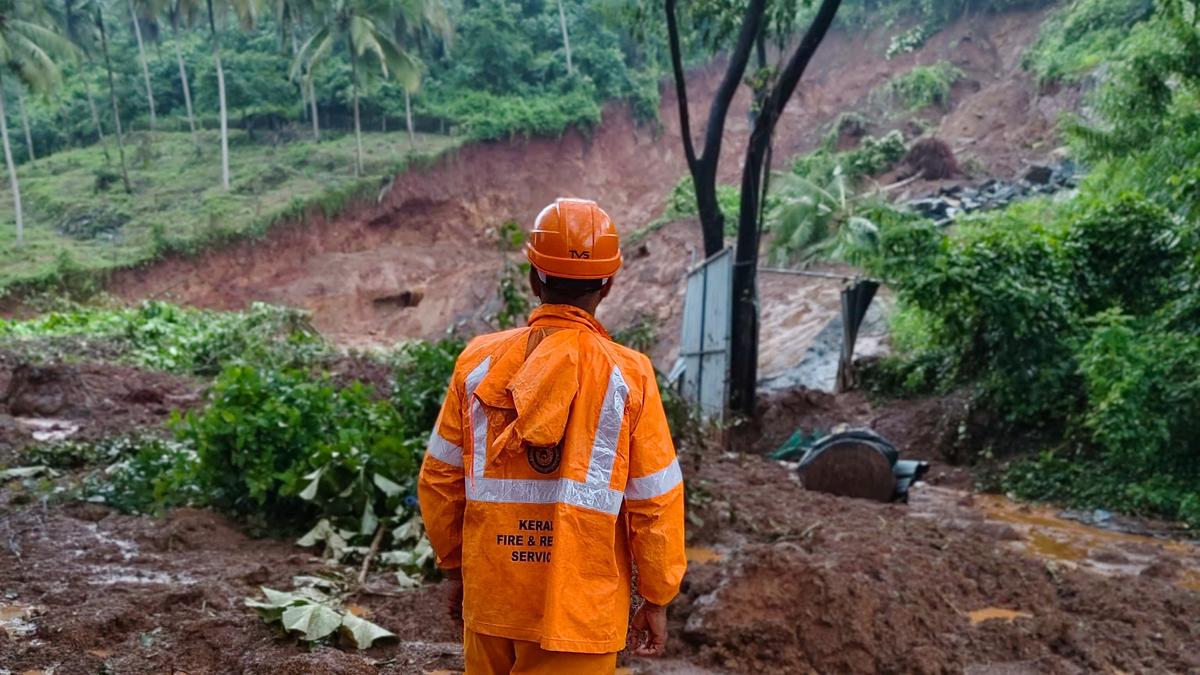
Kerala, situated in the Western Ghats foothills along India's western coast, has experienced a recurring issue of catastrophic landslides during monsoon season. Each year, these landslides result in numerous fatalities, particularly in the densely populated state with extensive habitation in vulnerable terrain. The Kerala government recently announced a ₹8-lakh aid package for the families of deceased victims.
The first major incident of 2023 was reported in Wayanad, where an extreme rainfall event triggered a debris slide at the entrance of an under-construction twin tunnel in Kalladi, resulting in eight deaths. Subsequently, minor landslides occurred in Idukki and Kottayam on July 31, claimed four lives. Kerala typically receives around 3,000 mm of rainfall annually, often in uneven, high-intensity spells exacerbated by climate change.
Kerala's steep terrain, weathered soils, and complex geology make it highly susceptible to landslides. For example, in 2018, an anomalous monsoon with 36% excess rainfall over the seasonal normal triggered 4,728 landslides, killing 48 people. Similar events occurred in 2019 (Puthumala in Wayanad) and 2021 (Kokkayar and Palappally in Idukki and Kottayam).
While extreme rainfall triggers most of these disasters since 2018, human interventions and geographical distribution also heighten susceptibility in parts of the Western Ghats. Despite fewer landslide events compared to Himalayan states, Kerala's share of landslide fatalities is disproportionately high due to its dense population and settlement in vulnerable areas.
The Landslide Atlas of India, released in 2023, shows that although the Western Ghats experience fewer landslides than the Himalayan region, Kerala remains highly vulnerable. About 4.75% of Kerala's area is classified as a high landslide hazard zone, with 14.4% estimated as landslide-prone. The state faces challenges in implementing restrictions on habitation and construction due to its dense settlement and limited land availability.
Many catastrophic landslides have occurred in the midlands, where plantations dominate land use. Factors influencing landslides include anthropogenic, agricultural, geomorphic, and tectonic factors, as well as human interventions. High-intensity rainfall exceeding 204 mm within 24 hours over already saturated and unstable slopes significantly increases the likelihood of slope failure.
To mitigate the impact of extreme weather events, Kerala needs a long-term action plan, accurate rainfall prediction for area-specific early warnings, installation of automated rain gauges and weather stations, prohibition of certain unscientific practices, and a stringent land-use policy. Ultimately, accurate prediction of extreme rainfall along with reliable, location-specific early-warning systems can help authorities evacuate vulnerable communities in time, potentially saving lives.
Written by urgent.news from The Hindu's reporting — not their text. Machine-written — may contain errors; check the original before relying on it.