How a single sperm protein recognizes highly divergent egg coat components
For successful fertilization, sperm must recognize and penetrate the egg coat, called vitelline envelope (VE) or, in mammals, zona pellucida (ZP). In abalone, sperm acrosomal protein lysin dissolves the VE by binding the N-terminal region of egg coat subunit VERL, encompassing 22 ZP-N domains (VR1-22), but how sperm engages other VE components remains unclear. Here we report free and lysin-bound…
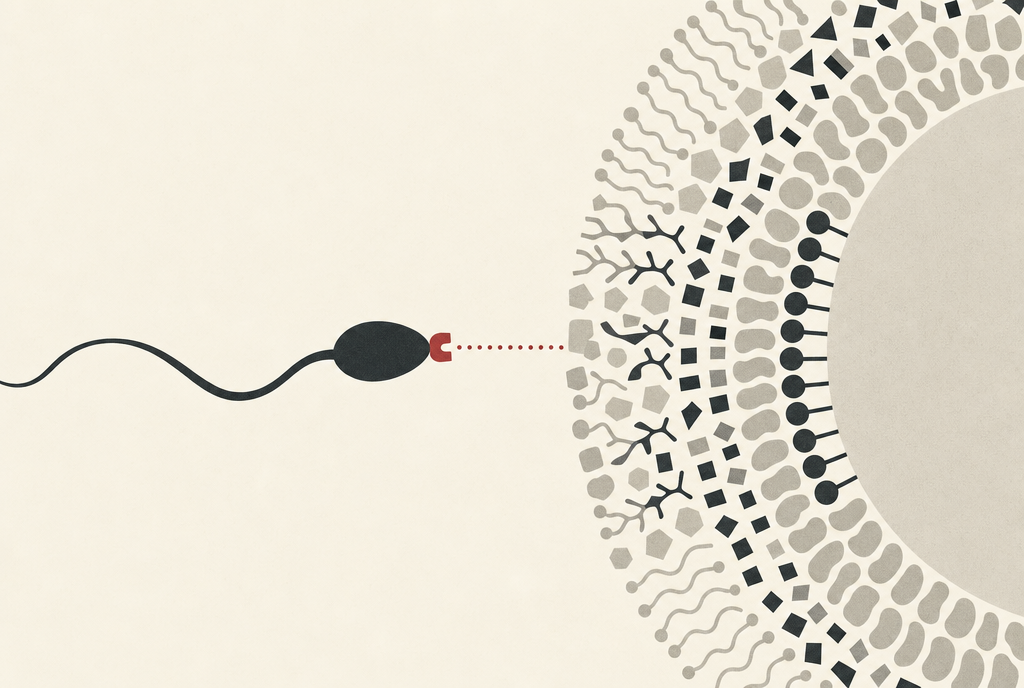
Successful fertilization hinges on sperm's ability to identify and breach the egg coat, known as the vitelline envelope (VE) in abalone or zona pellucida (ZP) in mammals. In abalone, sperm acrosomal protein lysin cleaves the VE by latching onto the N-terminal region of egg coat subunit VERL, which features 22 ZP-N domains (VR1-22).
However, the mechanism by which sperm interacts with other VE components remains unexplored. This study presents free and lysin-bound structures of VEZP14-N1, the solitary ZP-N repeat from VERL-related VEZP14, alongside biochemical and biophysical data. Although VEZP14-N1 shares around 20% sequence identity with the lysin-binding regions (VRs), it displays a structurally similar surface to lysin, suggesting that a consistent interaction geometry is responsible for recognition.
Remarkably, binding occurs asymmetrically: lysin remains conformationally rigid, while VEZP14-N1 necessitates homodimer dissociation and induced-fit rearrangements to engage -- a process that incurs kinetic costs, thereby limiting affinity to a moderate level. This characteristic, which serves as a decoy, effectively secludes lysin from VERL.
These findings shed light on how a single sperm protein can bind to dissimilar egg coat targets, carrying implications for the function of ZP-N repeat in vertebrate gamete recognition.
Written by urgent.news from bioRxiv's reporting — not their text. Machine-written — may contain errors; check the original before relying on it.