SpaceX’s Falcon 9 Rocket Is About to Crash Into the Moon—and It Could Be Visible From Earth
The impact will kick up a plume of debris so high, it’ll likely be visible through some telescopes. Astronomers will be watching.
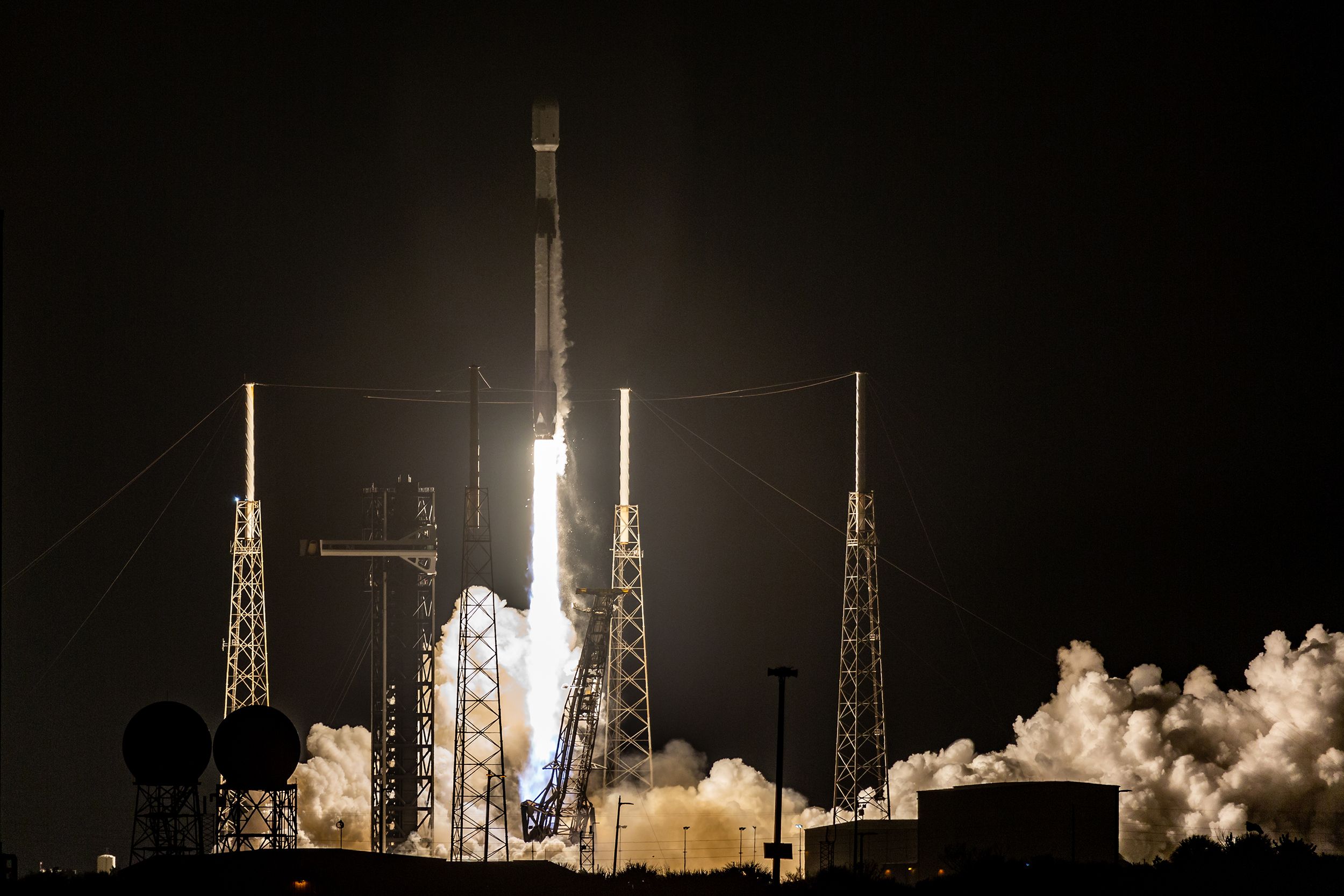
On August 5 at 6:34 am UTC, a decommissioned SpaceX Falcon 9 upper stage is set to collide with the moon's sunlit western limb near Einstein crater, traveling at over 5,400 mph. The crash, if it follows the predicted trajectory, could eject a plume of debris so bright that it may be observable from Earth with proper equipment. This would be the first such observation of a lunar impact flash.
Two new preprints support the theory, including one authored by William Jo, a doctoral candidate at the University of Texas at Austin, who modeled the potential impact using high-resolution physics simulation. The simulation suggests a debris displacement of around 12,700 kilograms. Although the crash's trajectory could vary due to the stage's angle, the plume should reach 90 seconds post-impact and be observable for a brief window before dimming.
The best viewing conditions are predicted to be in the US Southeast due to less atmospheric interference. Astronomers from UT Austin are urging both professional and amateur skywatchers to attempt observations of the event, which could offer valuable insights into lunar dust dynamics and potential hazards for future lunar missions.
Written by urgent.news from Wired Science's reporting — not their text. Machine-written — may contain errors; check the original before relying on it.