Hydrogel-enhanced bioelectrochemical nitrate reduction for ammonium recovery from dilute nitrate via Shewanella oneidensis MR-1
Bioelectrochemical reduction of dilute nitrate (NO3-; sub-mM to low-mM range) to ammonium (NH4+) offers a promising route toward circular nitrogen management from contaminated groundwater and environmental waters. However, on-site application of bioelectrochemical systems remains challenging due to low reduction rates and poor electron transfer efficiency of naturally formed biofilm electrodes.…
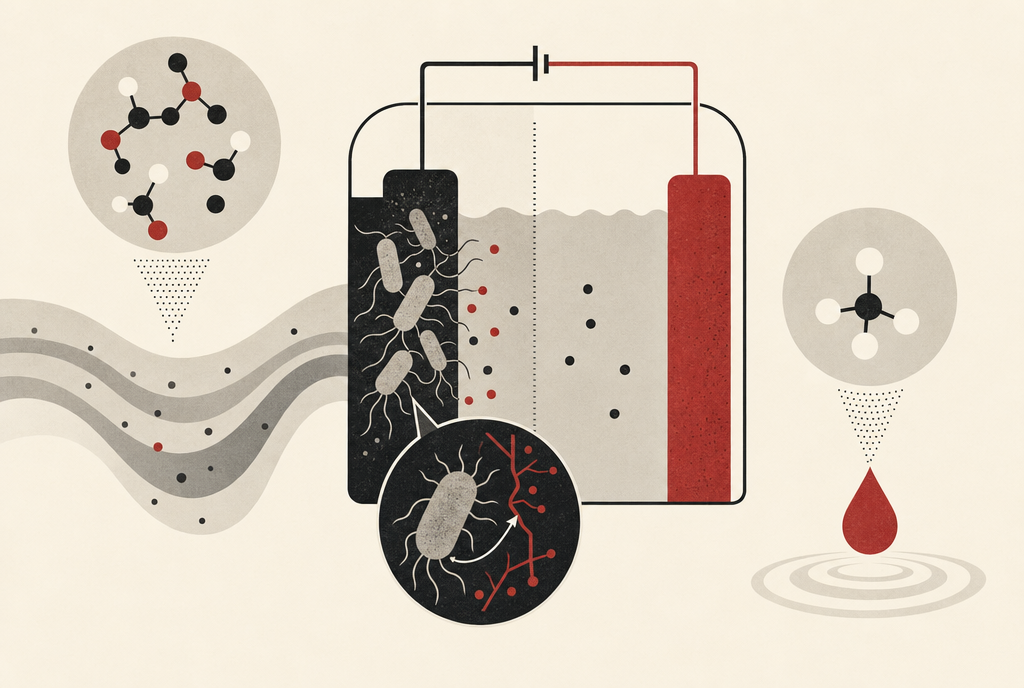
Researchers have developed a novel bioelectrochemical system that enhances the reduction of nitrate (NO3-) to ammonium (NH4+) for efficient nitrogen recovery. This innovation could pave the way for circular nitrogen management from contaminated water sources. The key to this advancement lies in the creation of a hydrogel biocathode, a unique electrode designed to improve electron transfer efficiency in the presence of naturally formed biofilm electrodes.
Constructed using a carbon black/riboflavin/sodium alginate/cellulose hydrogel, this biocathode incorporates Shewanella oneidensis MR-1 cells, which are known for their ability to facilitate electron transfer. The hydrogel electrode outperforms conventional Shewanella biofilm electrodes by producing NH4+ at rates of 0.16-0.19 mol m-3 h-1, with no accumulation of NO2-, a by-product of nitrate reduction.
The hydrogel's efficiency remains consistently high even after three consecutive cycles of operation, with a mere 1.5 days of total operation.
A major advantage of this hydrogel electrode lies in its ability to increase current density by more than five times compared to traditional biofilm electrodes. This enhancement is attributed to the improved electron transfer efficiency per unit biomass, directly contributing to the high NH4+ production rates. Notably, the hydrogel electrode consumes significantly less electricity for NH4+ production - 1.68-2.39 x 10^2 kJ g-N-1 - compared to metal catalyst systems at similar NO3- concentrations.
This energy efficiency makes the hydrogel electrode design a promising, easily manufactured platform for bioelectrochemical NH4+ production from dilute nitrate.
Written by urgent.news from bioRxiv's reporting — not their text. Machine-written — may contain errors; check the original before relying on it.