224,000-Year-Old Homo Skull Fragment Adds New Mystery to Human Origins
A fossilized skull fragment of Homo sp. unearthed in central Spain offers paleoanthropologists a fresh window into the story of ancient humans who lived in Europe hundreds of thousands of years ago. The post 224,000-Year-Old Homo Skull Fragment Adds New Mystery to Human Origins appeared first on Sci.News: Breaking Science News .
A fragment of a skull, discovered in central Spain, may belong to a teenager or young adult, according to scientists. The bone, from the Middle Pleistocene era, was unearthed at the Ruidera site in Ciudad Real, an area rich in early human fossils. The partial parietal bone, identified as RVH-1, is the first such cranial remnant found in Ruidera.
Researchers describe the bone as thick and possessing features similar to those seen in more archaic skulls from Europe and Africa. The bone's thickness measures 11.68 millimeters, and its temporal line angle is 132 degrees, both of which are near the upper range for European hominins from the Middle Pleistocene. Comparatively, RVH-1 is thicker and has a larger parietal angle than fossils from Sima de los Huesos, another Spanish site with Neanderthal-like characteristics.
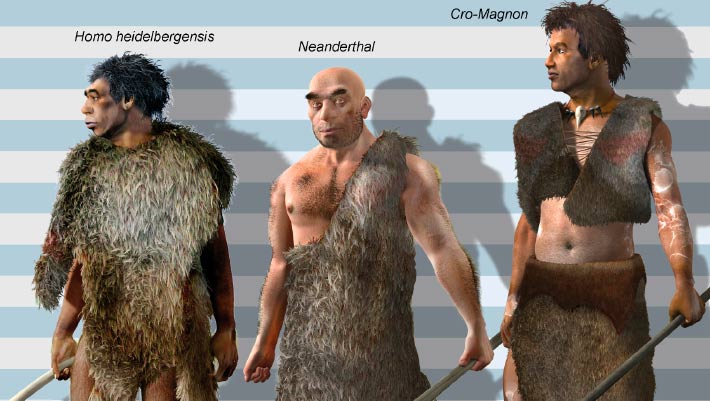
Its proportions are more similar to angular skulls from Africa and a few European sites, such as Ceprano in Italy. While researchers are hesitant to assign the fragment to a specific species, they classify it as Homo sapiens, acknowledging similarities to fossils often grouped under Homo heidelbergensis. The discovery underscores the complexity of human evolution in Europe, suggesting that various populations with unique evolutionary histories coexisted.
Determining the fossil's age has proven challenging, as two methods yield conflicting results: one estimate places the burial between 160,000 and 224,000 years ago, while another indicates about 18,000 years. This discrepancy may be due to the fossil's burial environment or the timing of the bone and surrounding materials entering the deposit.
The Ruidera site has yielded over 1,000 fossils since systematic excavation began in 2023, with the skull fragment discovered attached to reddish breccia during road construction. Researchers believe the original fossil deposit may be located a few meters uphill. The skull fragment, alongside the newly discovered fossils, hints at the potential for further discoveries in understanding human evolution in this region.
Written by urgent.news from Discover Magazine's reporting — not their text. Machine-written — may contain errors; check the original before relying on it.
This story
This is one outlet's version. Read the fullest account.