US declines to protect endangered monkeys used in medical research
Long-tailed macaques, monkeys native to Southeast Asia, have been listed as endangered on the IUCN Red List since 2022 after their populations declined by at least 50% over 30 years. Yet, the U.S. Fish and Wildlife Service (FWS) has twice now declined to consider protecting the species under the domestic Endangered Species Act. The most […]
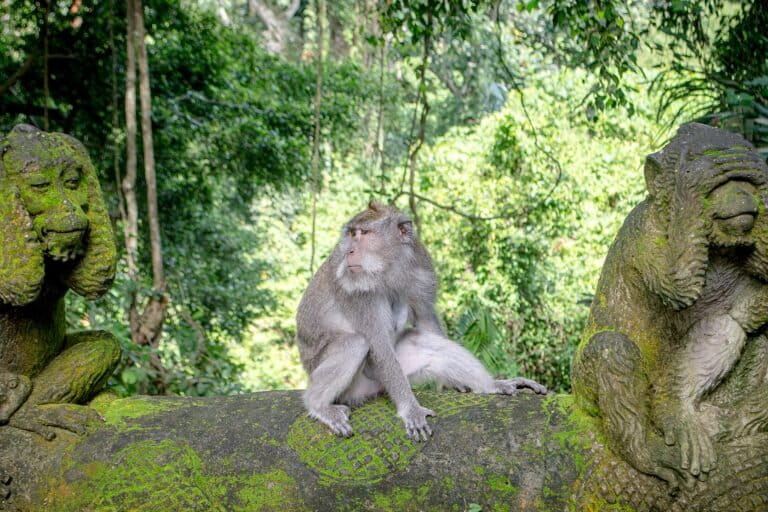
The long-tailed macaque, a native primate to Southeast Asia, remains on the IUCN Red List as endangered following a 50% population drop over three decades. However, the U.S. Fish and Wildlife Service (FWS) has, on two occasions, declined to evaluate protection under the domestic Endangered Species Act. The latest decision came on July 14, 2026.
The endangered status would have curtailed the import of the primates for biomedical research, a major threat to their dwindling numbers. Mongabay reached out to the FWS for a comment but did not receive a response prior to publication. These macaques, scientifically known as Macaca fascicularis, possess the ability to thrive in diverse environments, ranging from riverbanks and mangroves to rainforests and urban areas.
Nevertheless, their once thriving populations have seen a drastic decline due to habitat loss, climate change, hunting, and illicit trade, predominantly driven by biomedical research. According to the IUCN, poaching from the wild contributes to bolstering breeding farms in Cambodia, Laos, and Vietnam, which supply labs overseas.
Lisa Jones-Engel, chief scientific advisor for primate experimentation and representative of People for the Ethical Treatment of Animals (PETA), attributes the macaques' population decline primarily to trapping for medical testing. She asserts that entire groups, including infants and breeding females, are captured from the wild, sold into breeding. This article was initially published on Mongabay.
Written by urgent.news from Mongabay's reporting — not their text. Machine-written — may contain errors; check the original before relying on it.