Drifting SpaceX rocket heading for accidental collision with moon
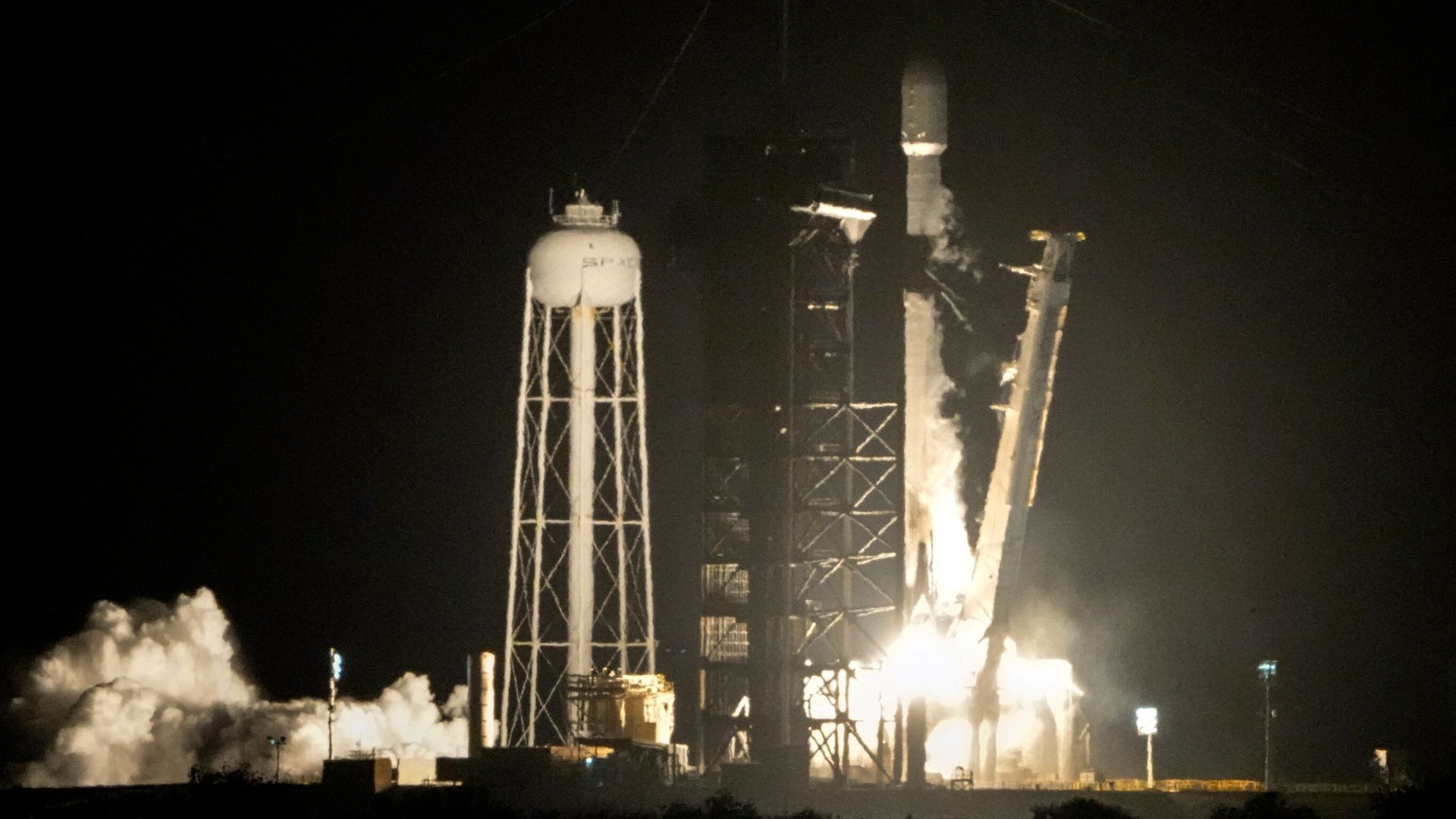
Scientists and sky gazers will watch intently as rocket’s upper stage slams into lunar surface on Wednesday A drifting SpaceX rocket is on a collision course with the moon after launching a pair of lunar landers more than a year ago. The rocket’s upper stage will unintentionally slam into the moon on Wednesday, carving out a crater and sending up a plume of dust and rubble that scientists – and…
A drifting SpaceX rocket is on track to collide with the moon on Wednesday, according to scientists and sky gazers. The rocket's upper stage, which launched two lunar landers a year ago, will unintentionally slam into the lunar surface at a speed of 5,400mph (8,700km/h), seven times the speed of sound. This impact is predicted to occur near Einstein Crater on the moon's sunlit western limb, with the best views expected in the early morning hours for the eastern parts of the US, Canada, and much of South America.
Space tracking expert Bill Gray, who plans to observe the aftermath from New Brunswick, Canada, emphasizes the growing concern over the increasing number of objects in orbit. While the particular rocket is not of immediate concern, the crash highlights the potential hazards posed by debris in space. Gray notes that the crash could have been avoided if the upper stage had been redirected into a solar orbit.
This will be the second known instance of a dead rocket crashing into the moon accidentally. In 2022, a Chinese rocket segment created two craters on the lunar far side. The new impact will occur on the moon's near side, generating an energy equivalent to three tons of TNT explosives. The impact flash will likely be too faint to see from Earth, but the ejected material could stretch for several miles and remain visible to telescopes for tens of minutes.
Scientists anticipate a crater approximately 90ft across and 16ft deep (27 meters across and 5 meters deep) upon impact. Although this size is too small to observe from Earth, it should be detectable by spacecraft. Benjamin Fernando, a researcher at Los Alamos National Laboratory, encourages both professional and amateur observations of the event.
He stresses the importance of studying debris impacts to better understand potential hazards for future astronauts. NASA's Lunar Reconnaissance Orbiter and South Korea's Danuri lunar orbiter will capture before-and-after images of the crash site.
Written by urgent.news from Guardian Science's reporting — not their text. Machine-written — may contain errors; check the original before relying on it.