Dengue virus 2 lacking N153 glycosylation displayed enhanced recognition by neutralizing antibodies
Deglycosylated (N153Q) dengue virus (DENV) mutant shows attenuated infection in a mouse model, mainly due to its increased antibody susceptibility. This is consistent with the neutralization assay showing human monoclonal antibodies 2D22 and C10 are more potent towards the mutant than the wild-type (WT) virus. Here, we compared the cryoEM structures of WT and mutant viruses complexed with these…
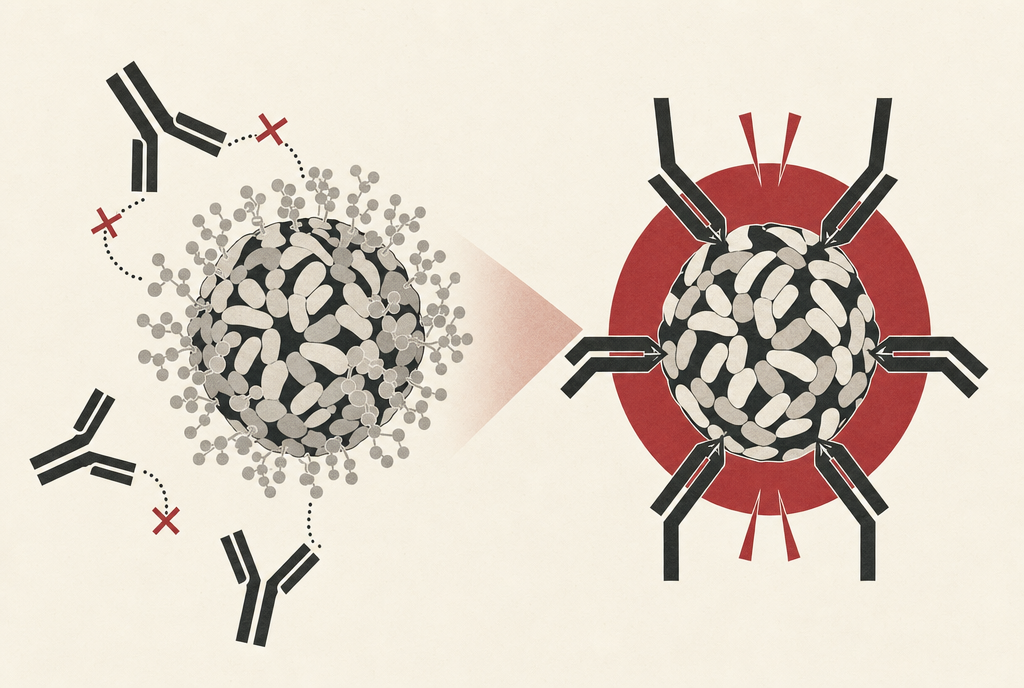
Recent research into the dengue virus (DENV) mutant with N153 glycosylation absence has revealed intriguing findings. This deglycosylated variant, specifically with N153Q alteration, exhibits heightened susceptibility to neutralizing antibodies, as evidenced by its performance in a mouse model. Human monoclonal antibodies 2D22 and C10 have demonstrated increased potency against the mutant virus compared to its wild-type counterpart.
A comparative analysis of the cryoEM structures of both the wild-type and mutant viruses, complexed with these two Fabs (Fab fragments), provided further insight. The results indicated elevated occupancies for both Fabs on the mutant virus, suggesting that the absence of glycosylation has increased the accessibility of previously blocked epitopes.
Despite the Fabs displaying slower binding rates to the mutant virus, they also exhibited a slower dissociation rate. This dual characteristic could potentially contribute to the higher Fab occupancies observed, as once bound, the antibodies remain associated with the virus for an extended period.
The findings suggest that the N153Q mutant could serve as a promising candidate for a dengue virus vaccine. By making important epitopes more accessible, this modified virus may stimulate the production of highly potent antibodies, offering a potential avenue for enhanced disease protection.
Written by urgent.news from bioRxiv's reporting — not their text. Machine-written — may contain errors; check the original before relying on it.