The titin N2A-MARP signalosome constrains muscle longitudinal hypertrophy in response to stretch
Titin-based mechanosensing is a key driver of trophic signaling in muscle, yet the downstream pathways linking titin sensing to muscle remodeling remain poorly understood. To investigate these signaling mechanisms, we utilized unilateral diaphragm denervation (UDD), an in vivo model that induces titin-stiffness-dependent hypertrophy via mechanical stretch. Using UDD in rats and mice, we…
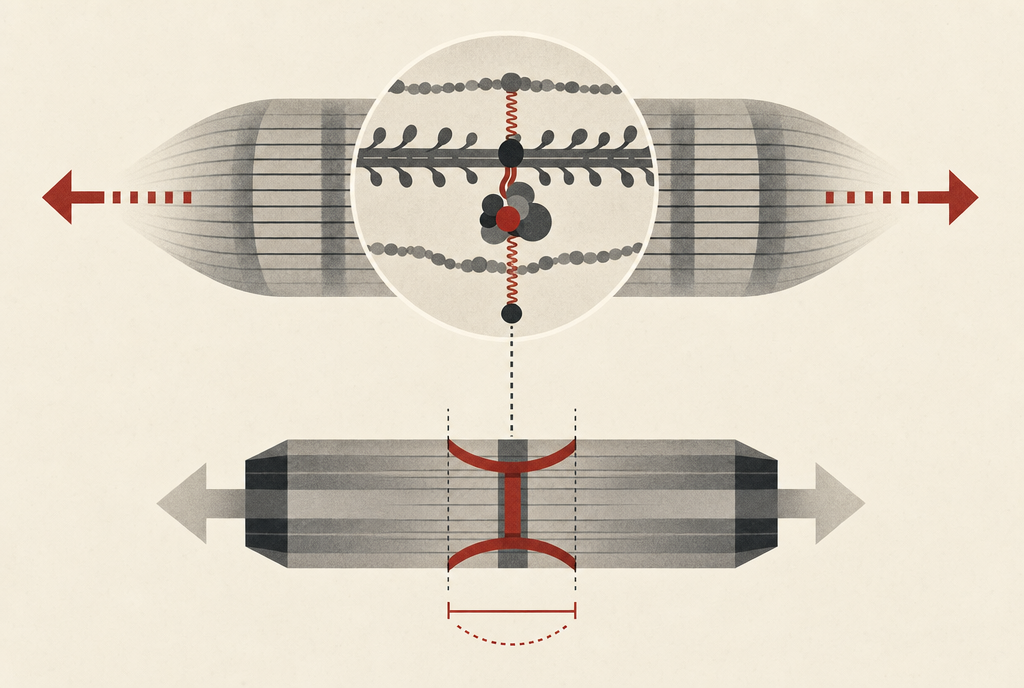
Titin-based mechanosensing plays a crucial role in muscle remodeling, but the specific pathways connecting titin sensing to muscle growth are not fully understood. To unravel these mechanisms, researchers employed a model involving unilateral diaphragm denervation (UDD) in rats and mice, which induces stretch-induced hypertrophy through mechanical stretch.
This model allowed them to differentiate stretch effects from denervation impacts by conducting comprehensive transcriptomic and proteomic analyses post-UDD and bilateral diaphragm denervation (BDD).
The study revealed an upregulation of titin-associated muscle ankyrin repeat proteins (MARPs) in response to UDD. Further investigation into the phosphorylation landscape using mass spectrometry in mouse diaphragms unveiled the involvement of the N2A-element. When UDD was performed in MARP knockout (KO) mice, there was an increased longitudinal hypertrophy, as confirmed by Western blot analysis indicating the activation of the mTOR pathway.
Crucially, pharmacological inhibition of mTORC1 using rapamycin effectively suppressed longitudinal hypertrophy, demonstrating that mTOR signaling acts as a central regulator of titin-mediated hypertrophic growth in a MARP-dependent manner. These findings underscore the importance of MARPs in modulating titin-based mechanotransduction and highlight mTORC1 as a critical player in the regulation of longitudinal muscle hypertrophy.
Written by urgent.news from eLife's reporting — not their text. Machine-written — may contain errors; check the original before relying on it.