Climate-fueled wildfires in Europe push emergency response to the limit
Crews are battling to control wildfires that have spread rapidly across parts of Europe, forcing the evacuation of more than 330,000 people in France, Spain and Portugal. Fifteen deaths have been reported and nearly half a million acres have burned. The scope and speed of the fires are pushing emergency response systems to their limits. Amna Nawaz discussed more with Ciaran Nugent.
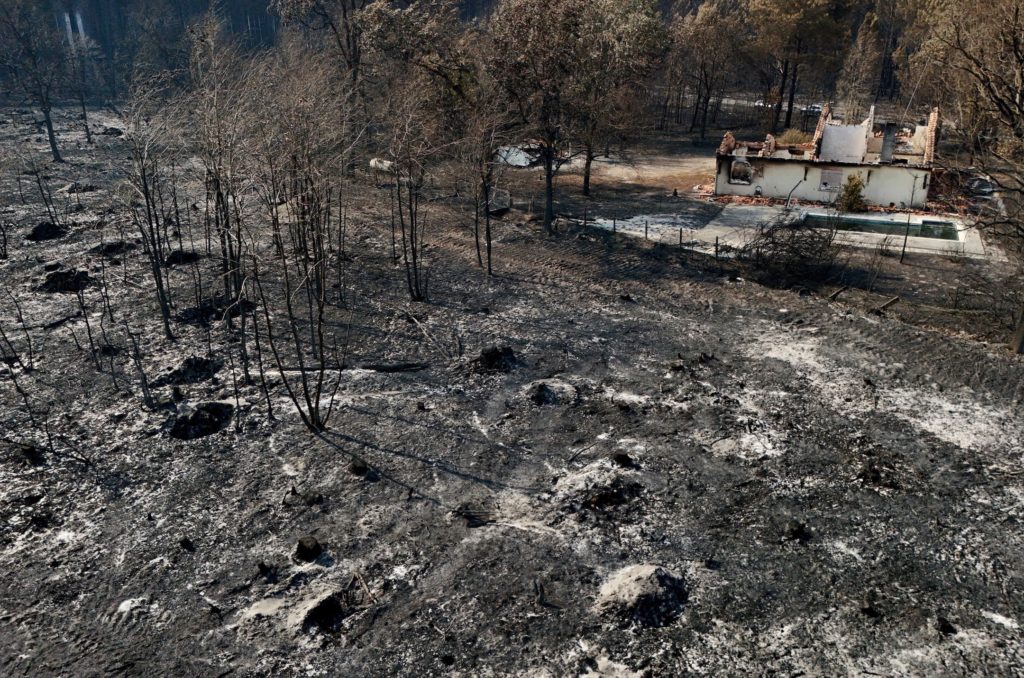
Wildfires are raging across parts of Europe, forcing the evacuation of over 330,000 people in France, Spain, and Portugal. The fires have burned nearly half a million acres and caused 15 deaths. Emergency response systems are struggling to cope with the scale and speed of the fires. Christophe Peres, a resident in France, described the devastation, saying, "We are powerless today.
It has eaten everything in its path." Hundreds of firefighters are working to contain the flames, but the situation is becoming increasingly difficult. Ciaran Nugent, vice president of the International Association of Wildland Fire, joined the discussion and explained that wildfires are not new to Europe, but this year's fires are different in terms of scale, intensity, and early onset.
Heat waves, becoming more frequent due to climate change, are playing a significant role in fueling the fires. Half of Europe is currently experiencing drought or near-drought conditions, making the vegetation highly flammable. While European countries have advanced fire management systems, the current emergency response is reaching its limits.
To effectively address this issue, a broader, more integrated approach is needed, focusing on landscape management, preventive measures, and adaptation to the changing climate.
Written by urgent.news from PBS NewsHour Science's reporting — not their text. Machine-written — may contain errors; check the original before relying on it.
This story
This is one outlet's version. Read the fullest account.