Researchers develop novel hyperbranched polymer scaffolds for wound healing and skin regeneration
Research Matters Staff Writer(s) Bhubaneswar 30 Jul 2026 The restoration of damaged human tissue requires establishing a microenvironment that can mimic the complex signalling of the extracellular matrix. Recent breakthroughs in biomaterials have highlighted the critical importance of the relationship between keratinocytes, the primary cells of the skin’s outer layer, and peripheral nerve…
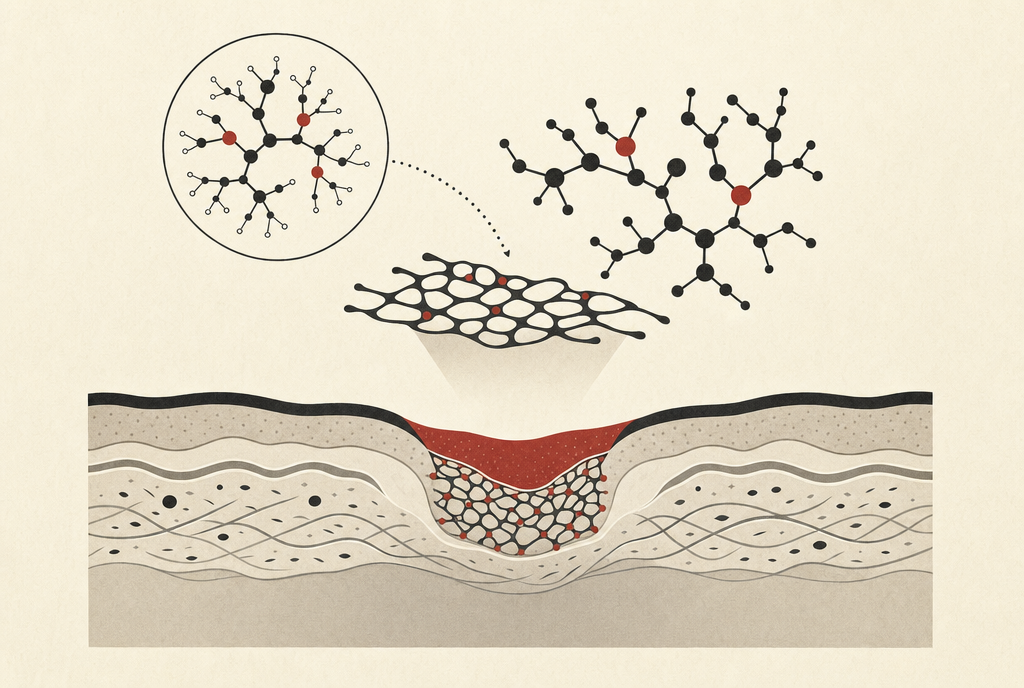
Researchers from the University of Calcutta, the National Institute of Science Education and Research in Bhubaneswar, and various elastomer companies have created a new class of polymeric scaffolds for wound healing and skin regeneration. These hyperbranched poly(ethylene glycol)-trimesic acid (PEG:TMA) materials are engineered to closely mimic the extracellular matrix, providing an optimal environment for keratinocytes and peripheral nerve endings to interact.
By adjusting the molar ratio of PEG to TMA, the team produced five distinct formulations, with S3 and S5 proving particularly effective for cellular attachment and supporting neuronal integration. The S3 formulation, with a 1:2 PEG:TMA ratio, exhibited an "optimal equilibrium" for nutrient diffusion and cell adhesion, while the S5 formulation, with a 1:5 ratio, demonstrated superior support for complex co-culture environments involving both skin cells and neurons.
These advanced scaffolds can modulate oxidative stress and calcium homeostasis, making them promising tools for tissue repair and regeneration. As the global demand for regenerative medicine grows, these customisable scaffolds could lead to significant improvements in skin, muscle, and nerve tissue recovery.
Written by urgent.news from Research Matters India's reporting — not their text. Machine-written — may contain errors; check the original before relying on it.