A Thermal Camera Trick Could Let LIGO See Twice as Far
A team of researchers have found a surprisingly simple way to boost the sensitivity of gravitational wave detectors like LIGO. It’s surprisingly simple to, just point an ordinary thermal imaging camera at the mirrors themselves. The technique could improve LIGO's next upgrade by up to 31%, letting it detect neutron star collisions tens of millions of light years farther away, and is already being…
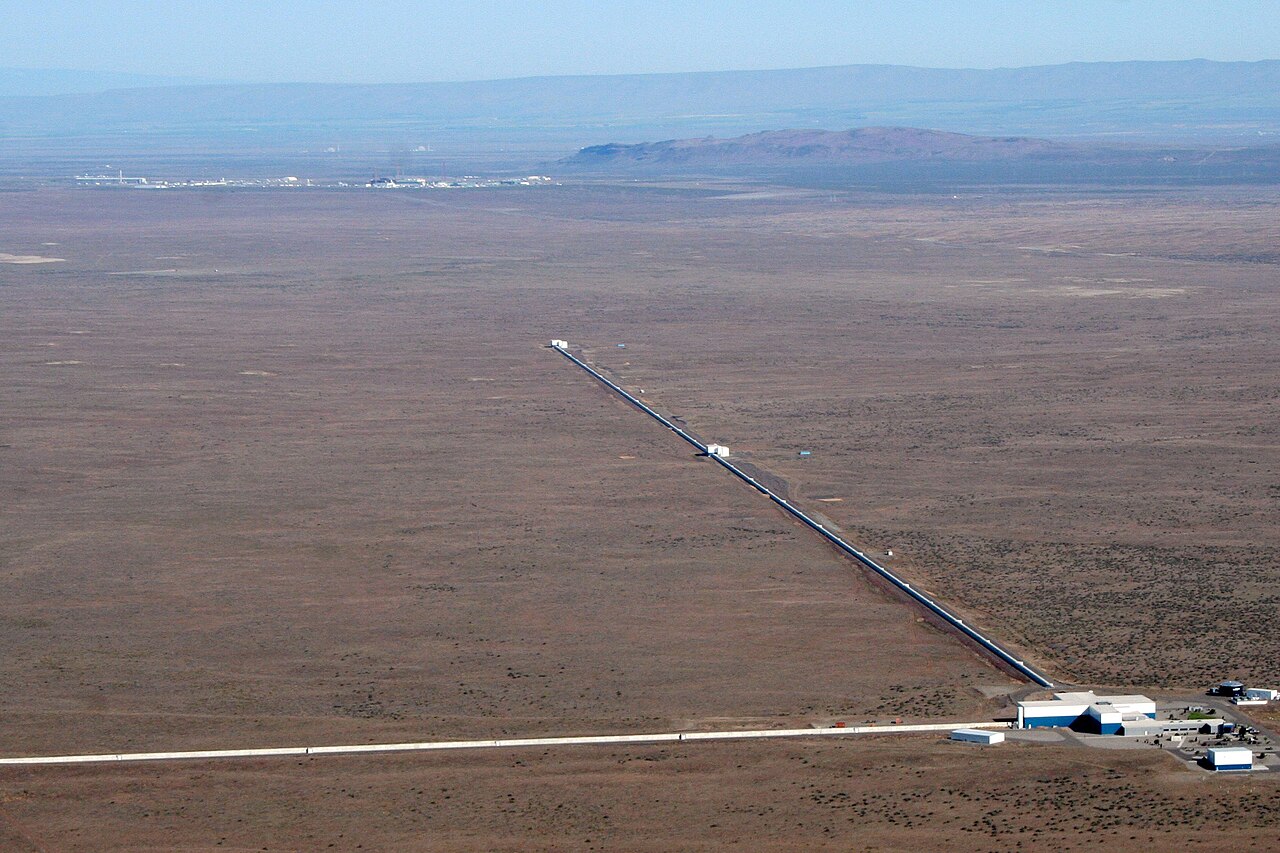
A thermal camera, typically used for detecting heat, could help LIGO, the instrument designed to detect gravitational waves, see twice as far. LIGO measures distortions smaller than the width of a proton by monitoring changes in distance along its four-kilometer arms. Laser light circulates at power levels approaching a megawatt, but even the mirrors absorb a sliver of this light, heating them and warping their shape by just a few nanometres.
This tiny warp distorts the beam and reduces the detector's sensitivity. Scientists already knew how to correct this by applying controlled counter heating, but lacked a reliable way to know exactly how each mirror was distorted. Jonathan Richardson's team at UC Riverside found a simple solution – photograph the mirror's surface temperature with an infrared camera.
By combining this with existing measurements and computer models of heat movement through the glass, they could reconstruct the distortion across the mirror's entire face. This method, which doesn't require new technology, could boost the strain sensitivity of the upcoming LIGO A+ upgrade by up to 31%. This would allow LIGO to spot binary neutron star mergers roughly 33 million light years farther away on average, significantly increasing the number of events it can detect.
This technique is already being integrated into the design of Cosmic Explorer, the proposed next-generation gravitational wave observatory, with Richardson leading its sensing and control system design.
Written by urgent.news from Universe Today's reporting — not their text. Machine-written — may contain errors; check the original before relying on it.