Is 6 CPU cores enough for gaming? Disabling E-cores revealed the catch
CS2 and Dota 2 barely noticed losing my Core i5-13600K's efficiency cores, yet modern AAA games quickly ate up the headroom
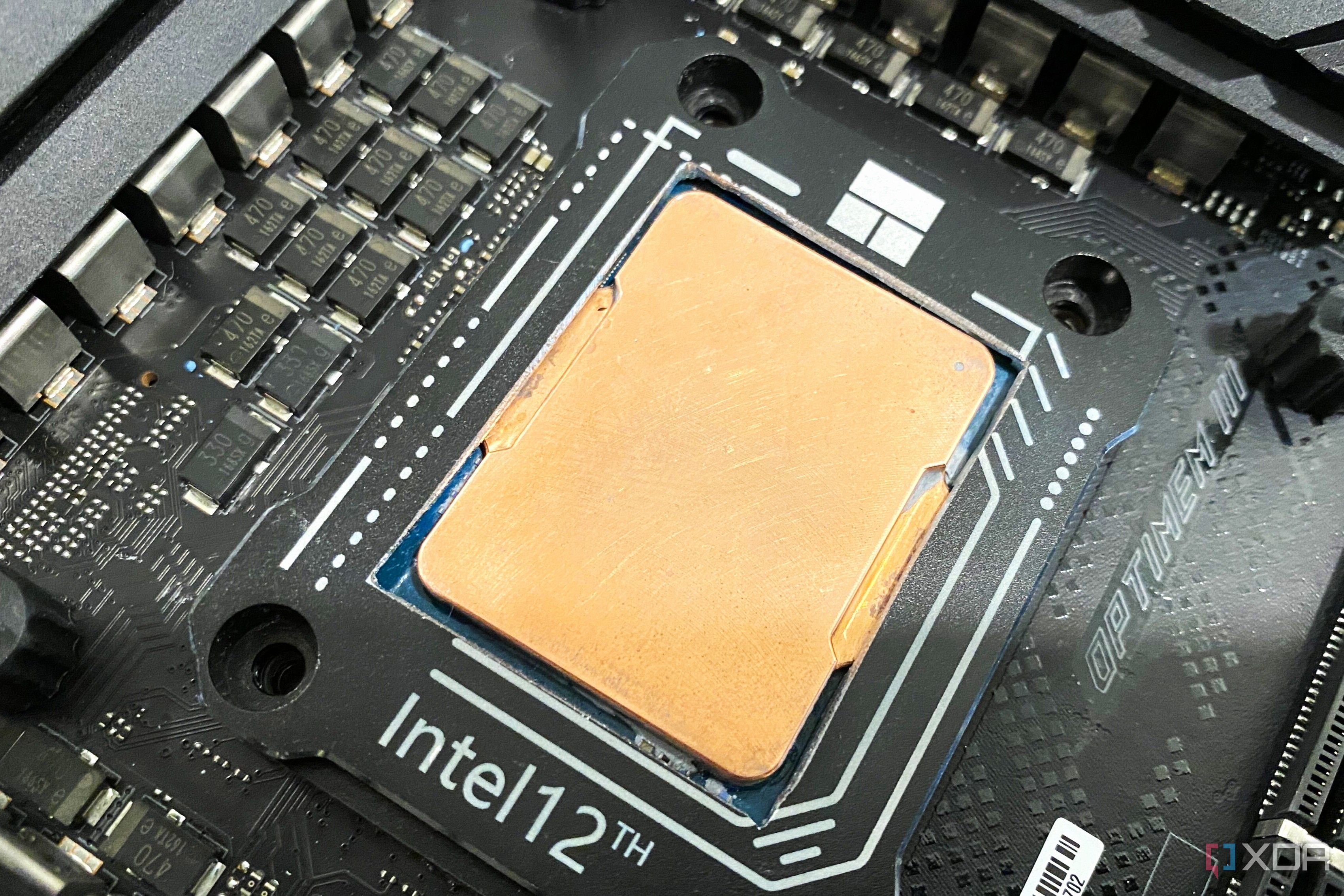
The conventional wisdom among PC gamers suggests that six CPU cores are sufficient for gaming, and some even recommend turning off E-cores in the BIOS to improve performance. To test this claim, I disabled all eight E-cores on my Core i5-13600K while keeping Hyper-Threading enabled, resulting in a standard 6-core, 12-thread configuration paired with my RTX 4090 at stock settings, running 1440p native resolution with no upscaling.
Testing four games revealed the hidden benefits of the extra cores: lighter titles barely notice the increased core count, while modern AAA titles make extensive use of them. In Marvel's Spider-Man: Miles Morales, maxed out at native 1440p with ray tracing enabled, my frame rate was around 142FPS, with the eight E-cores running at 48% to 60% usage, sharing the workload with the main P-cores.
Disabling the E-cores resulted in a frame rate drop to around 136FPS and a 6-7% reduction in GPU usage. The CPU usage spiked to nearly 90%, even during idle periods. Turning off ray tracing yielded similar results, with frame rates decreasing to 206FPS and GPU usage falling by about 10%. Dragon's Dogma 2, an unevenly optimized game, still demonstrated the importance of extra cores.
At native 1440p with maximum settings and ray tracing off, my frame rate was 138FPS with all 14 cores active. The eight E-cores handled between 31% and 43% of the workload, maintaining a CPU usage of 38% and GPU usage of 88%. Disabling the E-cores reduced frame rate to 122FPS, increased CPU usage to 60%, and decreased GPU usage to 85%.
Six P-cores absorbed the missing cores' workload, with thread usage ranging from 49% to 83%. Enabling ray tracing showed the RTX 4090 staying at 98% to 99% load, with the game running at 108FPS regardless of the E-cores' status. However, their workload distribution shifted to the six P-cores, pushing total CPU usage from 32% (with E-cores enabled) to 49% (with E-cores disabled).
Regardless of GPU bottlenecks, those E-cores remained active, affecting overall CPU usage. Many users disable E-cores to reduce power consumption and lower temperatures. Across all tested games, disabling the E-cores consistently reduced CPU package power by 9W to 14W. Temperatures varied, with improvements in Dragon's Dogma 2 (5°C to 11°C cooler) and negligible changes in Counter-Strike 2, Dota 2, and ray-traced Spider-Man: Miles Morales (temperature increase from 60°C to 66°C).
In Spider-Man: Miles Morales, disabling the E-cores without ray tracing lowered CPU power from 78W to 68W, but temperatures rose from 60°C to 66°C. Cramming the workload onto six P-cores concentrated heat instead of reducing it, and additional background apps or recording software could further increase temperatures. Counter-Strike 2 and Dota 2 demonstrated why some gamers still prefer six cores.
During intense fights in Dota 2, eight E-cores ran between 4% and 8%, while six P-cores pushed past 200FPS. Live matchmaking revealed similar behavior. In Counter-Strike 2 on competitive low settings, E-cores idled between 2% and 12%, and frame rates remained over 400FPS without them. The real catch is that lightweight competitive games don't indicate how heavier modern titles will perform.
When I re-tested Counter-Strike 2 with the E-cores turned off, the change was minor, trimming CPU power from 72W to 61W, as Source 2 relies more on main cores. Newer open-world and ray-traced DX12 games actively utilize those extra cores, leaving idle cores unused. While my results come from a Core i5-13600K and RTX 4090 at native 1440p, achieving 136FPS and 122FPS without E-cores in demanding games raises questions about the adequacy of six cores, particularly for 4K resolutions or mid-range GPUs.
However, crossing 90% CPU usage leaves minimal headroom once background applications or more demanding future games enter the picture. If you primarily play esports games like Counter-Strike 2 or Dota 2, six cores should suffice. For modern AAA titles, though, the extra cores are no longer idle; they directly share the workload, providing the processor with the necessary headroom.
Rewritten by urgent.news; may contain errors — check the original.
Source: xda-developers.com