Dinosaurier-Zeit: Einst liefen wohl Grashüpfer auf dem Wasser
Durch die Luft flogen winzige gefiederte Dinosaurier, am Ufer standen Farne - und auf dem Wasser liefen Grashüpfer: So könnte es vor 99 Millionen Jahren im heutigen Myanmar ausgesehen haben.
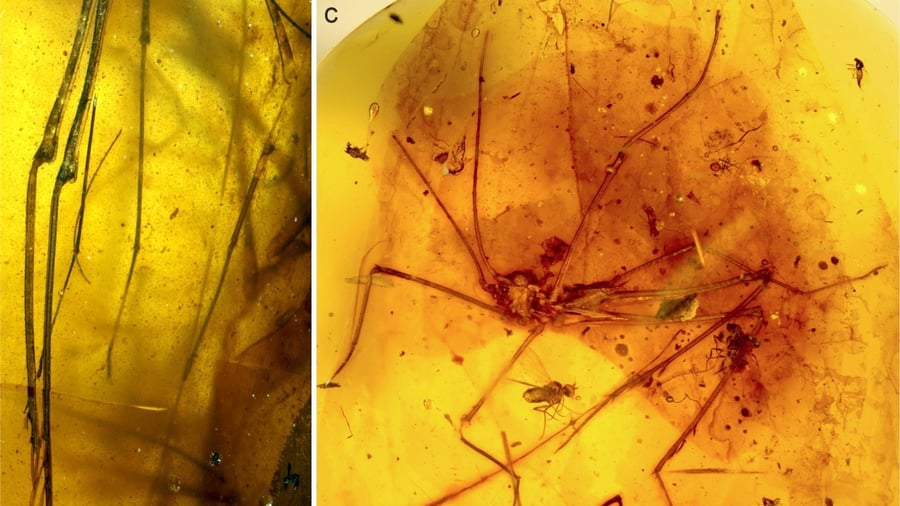
Insect species that can run on water are few and far between, as predators lurk beneath the surface and above as well, making such locomotion difficult for most. Today, the only animals that can remain on the water's surface for extended periods are members of the Gerromorpha group. However, millions of years ago, during the dinosaur era, it is believed that running on water was a common feature among certain grasshoppers.
According to a study led by Chunpeng Xu from the Senckenberg Research Institute and Natural History Museum in Frankfurt, fossilized remains of an extinct family of long-legged grasshoppers, now extinct, were found in 99-million-year-old amber from Myanmar. These fossils depict four adult and five nymphs of the Hydrelcanidae family, characterized by their wingless, short bodies, and exceptionally long, thin legs.
The computations suggest that the surface tension of water supported their weight. Their front legs had dense, comb-like bristles, while their hind legs bore leaf-like spines, which may have functioned as paddles. Thus, during the Mesozoic era, at least three unrelated insect families—Gerromorpha, Chresmodidae, and Hydrelcanidae—developed independent adaptations for running on water, indicating a highly dynamic aquatic habitat.
Rewritten by urgent.news; may contain errors — check the original.
Source: handelsblatt.com